METER Group, Inc. announces 2026 Grant A. Harris Fellowship winners
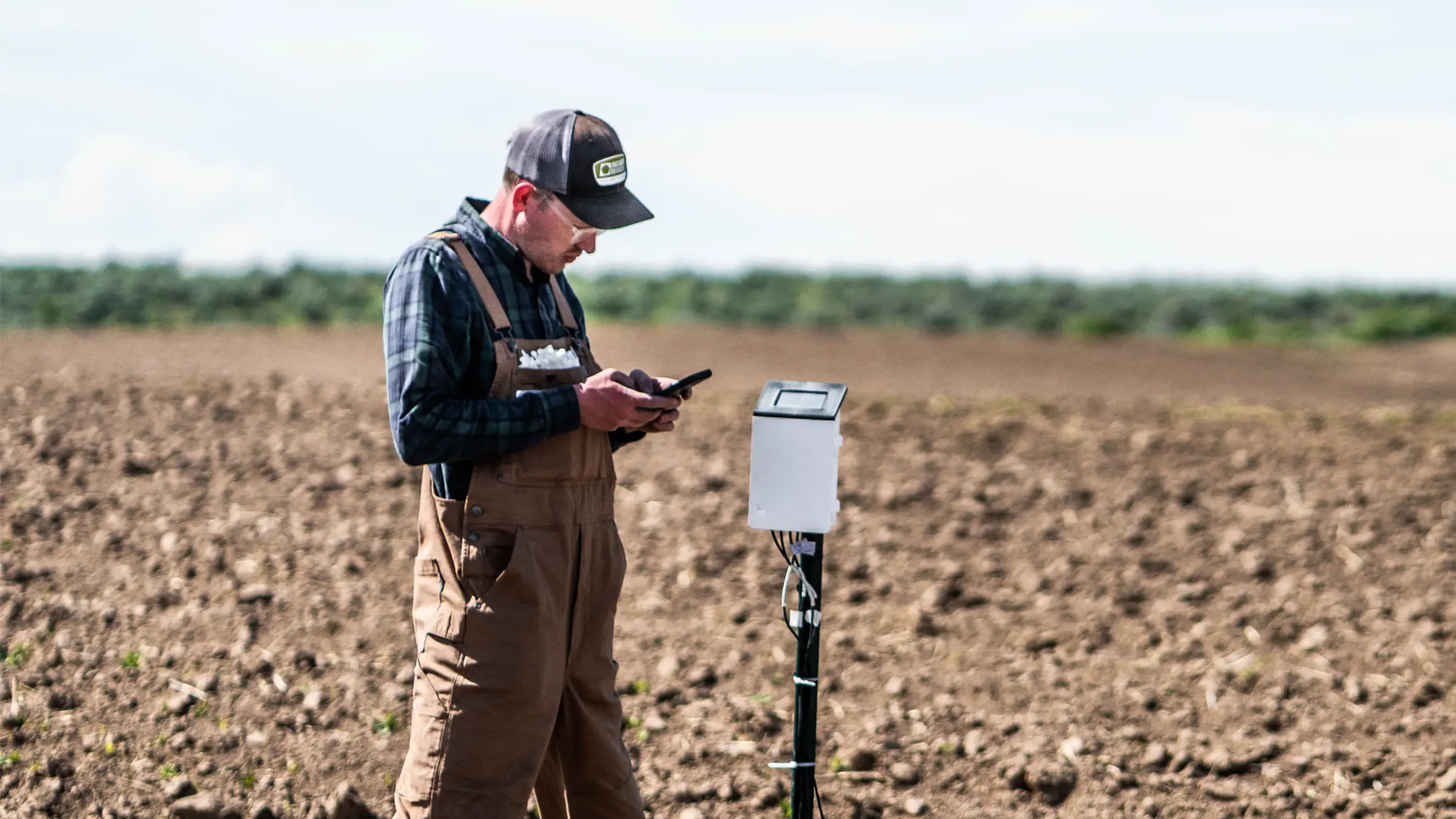
PULLMAN, WA—METER Group, Inc makers of precision scientific instrumentation and software solutions for environmental science, agricultural, and geotechnical applications is pleased to announce this year’s recipients of the Grant A. Harris Fellowship.
METER chose six outstanding proposals, along with four honorable mentions, from the submissions we received. Each recipient will receive $10,000 in METER instrumentation to further their innovative graduate-level work.
Winners
Mahdi Talebi: Rutgers University (Geotechnical Engineering)—awarded a HYPROP soil moisture release curve lab instrument and PARIO automated soil particle size analyzer. Mahdi’s project focuses on the influence of partial saturation on the engineering interpretation of cement-stabilized geomaterials. In his proposal, Mahdi writes:
Fine-grained sediments (FGS) are a largely underutilized construction material, and more than 200 million cubic yards of sediment are dredged annually in the United States by the U.S. Army Corps of Engineers. However, due to their high moisture contents and poor mechanical properties, FGS are commonly treated as waste and disposed of in landfill-like structures. Cement stabilization offers a viable pathway for beneficial reuse, however laboratory results have shown that under realistic moisture conditions, partial saturation and the related suction may govern the engineering response, resulting in challenges in interpreting the mechanical response (e.g., strength and deformation) using conventional soil mechanics frameworks, significantly limiting the potential use of FGS. This research will directly address this challenge by explicitly quantifying partial saturation and suction as functions of FGS moisture state, particle size, and organic content and coupling this with the mechanical behavior from direct simple shear tests on the same FGS.
Learn more about Mahdi and his previous work on:
Dorcas Kayode: Tennessee State University (Environmental Sciences) —awarded a SATURO dual-head infiltrometer and Mini Disk Infiltrometers. Dorcas’s project focuses on decoupling matric repellency from macropore flow in forest soils with long-term litter accumulation. In her proposal, Dorcas writes:
In forest ecosystems, the accumulation of leaf litter is traditionally viewed as a mechanism for enhancing infiltration and reducing erosion. However, as litter layers thicken and decompose, they release hydrophobic organic compounds that can coat mineral particles, leading to the development of soil water repellency (SWR). This project investigates the hydrological consequences of this wettability alteration. By utilizing a unique pairing of automated field-saturated conductivity and tension infiltration measurements, we will quantify how hydrophobicity reduces matrix flow, forcing water into rapid macropore bypass flow. This research will provide critical data for refining watershed runoff models in forested catchments.
Dinesh Gulati: University of Idaho (Water Resources)—awarded TEROS 54 soil moisture profile probes, TEROS 54 installation tool, NDVI sensors, ZL6 cellular data loggers, and subscriptions to ZENTRA Cloud. Dinesh is evaluating ET models for irrigation decisions using soil water depletion as a validation target. In his proposal, he writes:
This project advances evapotranspiration (ET) model evaluation by shifting validation against flux towers to root-zone soil water depletion, directly testing whether improved ET estimates meaningfully improve irrigation decision-making. Field investigations are proposed to evaluate the performance of established and emerging ground- and satellite-based ET models for irrigation management, with particular emphasis on their ability to accurately constrain root-zone soil water depletion in agricultural fields in southern Idaho. The proposed research demonstrates the use of soil water depletion as a direct validation target for state-of-the-art ET models. While most ET model evaluations focus on agreement with other ET estimates, irrigation decisions are governed by soil water depletion rather than ET itself. This project addresses that disconnect by evaluating whether improved ET estimates translate into improved predictability of root-zone soil water storage.
Learn more about Dinesh and his previous work on:
Avinash Gonnabathula: Texas A&M University (Geotechnical Engineering)—awarded TEROS 12 soil water content sensors, TEROS 21 soil water potential sensors, ZL6 Wi-Fi data loggers, and subscriptions to ZENTRA Cloud. Avinash is performing an instrumentation-based performance assessment of bridge abutment approach slabs. In his proposal, he writes:
Approximately 25% of the nation’s 600,000 bridges experience measurable settlement at their approaches, and often manifest in the form of a bump. Bridge bumps adversely affect the ride quality, safety, traffic-flow, and impose substantial maintenance demands and costs. Settlement of bridge approach slabs is often attributed to changes in moisture conditions within the supporting backfill geomaterial. Existing design methods are predominantly empirical and limited due to the lack of field data correlating hydraulic conditions of backfill to the settlement of slab. The objective of this research study is to understand the influence of moisture content and matric suction variation on the development of bridge bump through field pilot studies. A test bridge has been selected where moisture and matric suction sensors from the METER group will be systematically embedded at multiple depths in the supporting backfill. The hydromechanical response of the approach slab backfill will be examined for control (structural backfill) and cement-stabilized sections. Data collected from the in-situ moisture and suction sensors will be integrated with settlement data to establish the hydromechanical correlation for the bridge approach slab. This study will enable the development of sensor-based indicators for early detection of bump-prone conditions to plan the mitigation works ahead.
Learn more about Avinash and his previous work on:
Alex Crookshanks: Columbia University (Ecohydrology and Soil Science)—awarded TEROS 11 soil moisture sensors, TEROS 21 soil water potential sensors, ZL6 cellular data loggers, and subscriptions to ZENTRA Cloud. Alex is planning to characterize spatial variability of soil hydraulic properties of a northeastern forest using in situ soil moisture monitoring. In her proposal she writes:
In situ measurements of soil matric potential (Ψ) and volumetric water content (θ) are important for real time assessment of forest health and land-atmosphere interactions, and they are possibly more informative of natural phenomena than laboratory derived soil water retention curves (e.g. hysteresis, overburden pressure). However, assessment of in situ soil water retention is difficult due to high spatial and temporal variability. This project aims to improve the representation and understanding of soil water retention through a dense network of Ψ and θ sensors. Spatial variability analysis and comparison to lab derived soil water retention curves will inform best practices for characterizing forest soil hydraulic properties using both in situ and laboratory methods. Finally, this project will establish a legacy of open access soil moisture data available to researchers and community members.
Learn more about Alex and her previous work on:
Cheyenne Collins: University of Kentucky (Forensic Anthropology)—awarded TEROS 12 soil moisture sensors, an ATMOS 41 all-in-one weather station, ZL6 cellular data loggers, and subscriptions to ZENTRA Cloud. Cheyenne is evaluating multiple geophysical technologies in the detection of simulated clandestine graves over time. In her proposal she writes:
This multidisciplinary project evaluates which geophysical tools, or combination, most reliably detect simulated graves in clay-rich soils over time. Although ground-penetrating radar (GPR) is widely used for grave detection, its effectiveness is often limited in high moisture clay environments, necessitating assessment of alternative or complementary methods such as fixed-probe resistivity (FPR) and electrical resistivity tomography (ERT). This project involves geophysical monitoring of 14 simulated graves over 12-months using GPR, FPR, and ERT. Experimental graves will contain hog (Sus scrofa) carcasses serving as proxies for human remains. Variables that will be evaluated include grave depth, body size, tarpaulin wrapping, seasonality, soil moisture, and GPR antenna frequency. Findings from this project will significantly enhance forensic detection of clandestine burials and refine archaeological methods for grave identification across extended timescales.
Learn more about Cheyenne and her previous work on:
Honorable Mentions
Dominic Groman: Virginia Tech (Viticulture)—awarded TEROS 22 soil moisture sensors, an ATMOS 41 all-in-one weather station, ZL6 cellular data loggers, and subscriptions to ZENTRA Cloud. Dominic is investigating if shifts in soil matric potential explain grapevine responses to under-vine cover crops. In his proposal he writes:
Under-vine cover crops (UCCs) are a sustainable alternative to herbicide usage in vineyards, but their effects on soil water and vine performance in the warm, humid conditions of the Southeastern U.S. are not well understood. This project will use TEROS 22 sensors to track how annual and perennial UCCs affect soil matric potential and thereby influence grapevine nutrition, yield, and fruit quality. By investigating UCC effects on soil water dynamics under increasingly variable precipitation in the Southeastern U.S., this research will guide climate-adapted cover crop recommendations for commercial wine grape growers.
Victoria Wojahn: Colorado State University (Ecohydrology)—awarded SOLYX 14 soil moisture sensors, ZL6 cellular data loggers, and subscriptions to ZENTRA Cloud. Victoria is monitoring forest water dynamics through an integrated tree-soil sensor network. In her proposal she writes:
This project will investigate daily and seasonal water dynamics in ponderosa pine in a snow-dominated forest of northern Colorado. Beginning in spring 2026, four neighboring trees will be instrumented with TEROS-12 stem moisture sensors, sap flow sensors, and dendrometers, following laboratory calibration of the TEROS-12 sensors across controlled gradients of volumetric water content. A focal tree will be equipped with permanent trunk Electrical Resistivity Tomography (ERT) arrays at 3 different heights, and a surface ERT array will image soil moisture distribution. Calibrated stem measurements will be used to constrain interpretation of ERT signals and distinguish moisture-driven from fluid-conductivity-driven electrical responses. Results will quantify internal water storage dynamics and improve mechanistic understanding of tree water regulation under increasing drought stress.
Learn more about Victoria and her previous work on:
Katie Janzen: Kansas State University (Agronomy)—awarded an ACCUPAR LP-80, which measures canopy light interception and leaf area index. Katie is monitoring forest water dynamics through an integrated tree-soil sensor network. In her proposal she writes:
Fall armyworm (FAW; Spodoptera frugiperda) has emerged as a recurring and economically damaging pest in Kansas forage systems since 2021. Changing weather patterns, including later frosts and cool, wet weather may quicken reproduction and extend the lifespan of FAW in Kansas. In 2022, around 35% of Central and Eastern Kansas acreage was considered pasture or forage which tends to have limited inputs and less intense management than cropland, increasing their vulnerability to FAW. In 2025, producers in this region reported cool season perennial forages browning and potential mortality from FAW following late cuttings or intense grazing in the hot days of August. This project seeks to identify environmental and management factors influencing FAW damage severity and variability in Kansas forage stands to reduce economic risk for producers by evaluating the how (1) weather patterns, (2) soil properties (texture and nutrients), and (3) chemical applications influence FAW damage severity and variability. FAW migrates annually from Southern Texas to Kansas as early as mid-June, with populations increasing until the first frost. Compared to the 30-year average first frost date of October 12th in Central and Eastern Kansas, 2024 and 2025 had average first frosts 3 to 13 days later, extending FAW lifespan in Kansas. Results from this project will be adapted into a guide to reduce economic risk for Central and Eastern Kansas forages.
Sachin Khaniya: Washington State University (Soil Physics)—awarded TEROS 31 laboratory soil moisture sensors, SO-431 soil oxygen sensors, a HYPROP soil moisture release curve lab instrument, a ZL6 cellular data logger, a ZSC Bluetooth sensor interface, and subscriptions to ZENTRA Cloud. Sachin is studying hydraulic properties and root-zone oxygen dynamics in lunar and Martian regoliths. In his proposal he writes:
Human presence on the Moon and Mars are considered important milestones for space exploration. A prerequisite for human presence on the Moon and Mars is that crops can be grown to support food supply. However, both lunar and martian regoliths are unsuitable for crop production. Lunar and martian regoliths are nutrient poor and composed mainly of primary minerals, with a lack of significant amounts of clays. Successful crop production on the Moon and Mars this requires modification of the regoliths to make them suitable for plant growth. The goal of this project is to characterize water retention, hydraulic properties, and oxygenation of nutrient-amended lunar and martian regolith simulants to support wheat growth during space exploration missions. Regoliths will be amended with inorganic fertilizers, compost, and biochar. A standard potting mix will be used to compare the regolith substrates with a terrestrial growth medium. Water retention characteristics will be determined with the evaporation (HYPROP) and the dew point (WP4) methods. A separate column will be instrumented with sensors to monitor water potential (TEROS 31) and oxygen content (SO-411) to determine the optimal conditions for root zone aeration. Using these data, an optimal substrate will be designed to obtain adequate root zone oxygenation at target water potentials of −50 and −500 kPa (the former is optimal for wheat growth, the latter is optimal for root-zone pathogen suppression). The outcomes of this project will provide water-retention and oxygenation relationships of amended lunar and martian regoliths that inform space agriculture for extraterrestrial exploration missions.
Learn more about Sachin and his previous work on:
The Grant A. Harris Fellowship promotes innovation, thought leadership, and cutting-edge scientific research by recognizing graduate students who are making extraordinary contributions to any aspect of agricultural, environmental, or geotechnical science.
Visit here for more information about the Grant A. Harris Fellowship.
About METER
At METER Group, we aim to benefit humankind by developing innovative biophysical measurement tools that simplify environmental data collection, empowering meaningful discoveries in sustainability, safety, and ecosystem conservation.
www.metergroup.com
2365 NE Hopkins Ct.
Pullman, WA 99163
P +1.509.332.2756
Press Contact
Kerten Campbell, Director of Marketing
[email protected]