SC-1 Leaf Porometer
Stomatal Conductance
local base price
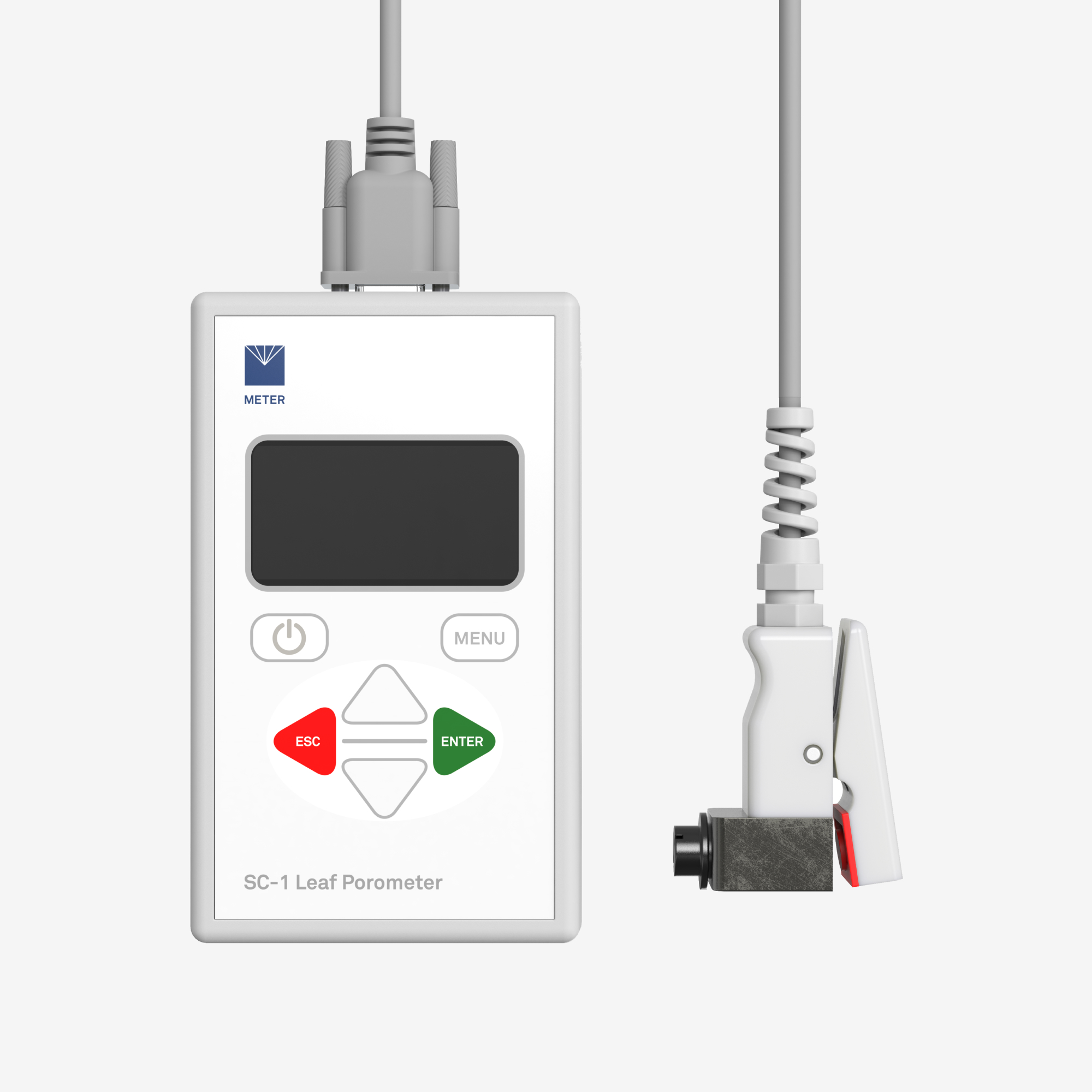
Quick measurements. Easy-to-use engineering. Low cost in the short and the long run. The SC-1’s breakthrough steady-state technology makes it the best for measuring stomatal conductance.
- Easy stomatal conductance measurements
- High speed results (readings in 30 seconds)
- Straightforward calibration and no moving parts
-
Overview / Features
-
Stomatal conductance is complicated. Measuring it doesn’t have to be
Most measurements in the soil-plant-atmosphere continuum are fairly straightforward. Measuring stomatal conductance is not. And since stomatal conductance can’t be predicted from theory and must be measured, you need an instrument that’s easy to use. You need the SC-1.
Complex science in a simplified package
Backed by solid scientific theory and 15 years of research, the SC-1 is designed to provide you with a simple solution to a complex problem. By measuring vapor flux from the leaf through the stomates, it enables you to tell the difference between transpiring leaves and ones that have shut down. High-speed results, ease of use, and a low cost mean more measurements in less time without blowing your budget.
Accurate readings in seconds
Not only can you make accurate leaf conductance measurements in only thirty seconds, but you can calibrate the SC-1 in just a few minutes. After calibrating, simply clip it on the leaves you are interested in and start measuring stomatal conductance.
Engineered for reliability
Quick measurements. Easy-to-use engineering. Low cost in the short and the long run. Save yourself time, hassle, and money with the leaf porometer that does all three. The SC-1’s breakthrough steady-state technology makes it the number one choice for stomatal conductance measurements.
Field-ready solution
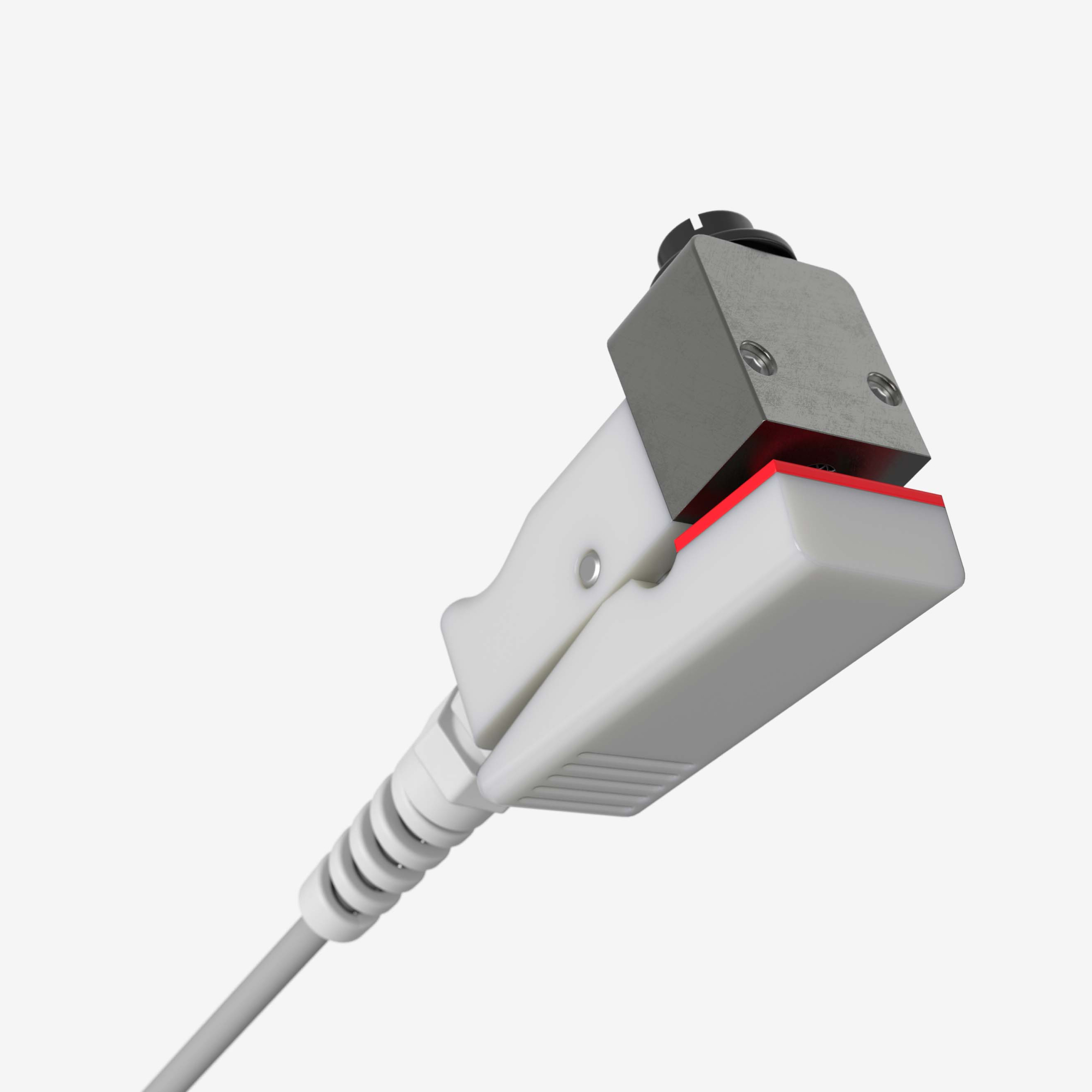
The SC-1 is simpler to use for a variety of reasons. It’s lightweight, so you won’t get fatigued carrying it around in the field (or around your neck). What’s more, breakthrough steady-state technology means it doesn’t have any moving parts, making it easy and reliable to use. Plus, calibrations are simple to do, and readings can be displayed as either leaf vapor conductance or resistance and saved for downloading later (USB cable and utility software included).
Low maintenance device that won’t break the bank
There’s low cost, and then there’s lifetime low cost. The SC-1 is affordable to begin with. And because it’s also low maintenance, you won’t have to keep dipping into your budget to get it repaired when the pump breaks or a seal goes bad. These combine to save you money in both the short and long term.
-
Feature summary
- Accurate
- High speed results (readings in 30 seconds)
- Straightforward calibration
- Affordable
- No moving parts
- Lightweight, easy to carry
- Save and download data (USB cable and download utility software included)
-
Specifications
-
TECHNICAL SPECIFICATIONS
Measurement Specifications
Stomatal ConductanceRange: 0 – 1000 mmol/(m2s)Resolution: 0.1 mmol/(m2s)Accuracy: ±10% of measurement from 0 to 500 mmol/(m2s)NOTE: The SC-1 can measure higher than 500 mmol/(m2s) and detect relative stomatal conductance change in the high range, but absolute accuracy becomes unverifiable past 500 mmol/(m2s).Measurement Time30 sPhysical Specifications
DimensionsLength: 15.8 cm (6.2 in)Width: 9.5 cm (3.8 in)Height: 3.3 cm (1.3 in)Sensor Aperture Diameter6.35 mm (0.25 in)Sensor Cable Length1.2 m (4 ft)Universal Power4 AA batteries (not included)Data Storage4,095 measurements in flash memoryBattery Life2 years (battery drain in sleep mode is <50 μA)Sensor Head DimensionsLength: 12.0 cm (4.7 in)Width: 2.5 cm (1.0 in)Height: 5.5 cm (2.2 in)Operating Temperature RangeMinimum: 5 °CMaximum: 40 °COperating Relative Humidity RangeMinimum: 1 %Maximum: 100 % , with desiccant chamberConnector TypesSerial-to-USBOther
ComplianceEM ISO/IEC 17050:2010 (CE Mark)GSA
-
Support / FAQ
-
SC-1 Leaf Porometer ManualManualPDF, 2.9MBSC-1 Leaf Porometer Quick StartQuickstart GuidePDF, 1.3MBSC-1 Leaf Porometer Utility InstallerInstallerEXE, 7.2MBSC-1 Firmware Updater for Instrument with Desiccant ChamberFirmwareEXE, 1.4MBSC-1 Leaf Porometer Firmware Updater for Instrument without Desiccant ChamberFirmwareEXE, 1.39MBSC-1 Sensor Head Replacement InstructionsInstructionsPDF, 0.47MB
-
SC-1 Leaf Porometer FAQs
- How do you calibrate the SC-1?
- See the VIDEO: SC-1 Calibration
- What are best practices for using SC-1 in a vineyard?
- See article: SC-1: best practices for measuring vineyard stress
- What are SC-1 repair and maintenance techniques?
- See the VIDEO SC-1 Repair and Maintenance
- Can the SC-1 be used with needles/thin leaves?
-
When measuring small needles or leaves, they should be inserted into the sensor as shown below. This is because single needles or small leaves (including blades of grass) may not adequately cover the aperture of the sensor.
For an accurate measurement it is critical that the entire cross sectional area of the diffusion path be covered with leaf material. Sometimes it is necessary to remove the leaves/needles from the plant in order to arrange them over the opening in the diffusion path. This results in an accurate measurement as long as the measurement is completed within two minutes of leaf/needle removal, because the stomatal aperture should remain unchanged for at least that long after disturbance.
Please note that needles with a square or triangular cross-section and lots of sclerenchyma may not work with the SC-1 because they will prevent a good seal with the chamber. Needles of the genus Picea are a good example of needles for which the SC-1 is not well suited, while the flat, pliant needles common to Abies work quite well.
- How long does a measurement take?
- One measurement with the SC-1 takes 30 seconds (in auto mode). The time to get the relative humidity <10% between measurements varies (e.g., 30-90 seconds), but it shouldn’t take longer than 90 seconds of shaking the sensor head. If it takes longer than 90 seconds of shaking the sensor head between measurements, then check the desiccant to ensure it is blue (for Indicating Drierite, 10-20 mesh). If the problem persists, replace the teflon filter that separates the measurement chamber from the desiccant, and check the rubber seals on the porometer head.
- What should I check if during the measurement period, leaf conductance declines toward zero instead of increases (as it would normally over the auto measurement period?
- Double check that the units in the measurement screen are in mmol/m2s and not m2s/mmol or s/m.
- Can the diffusion path of the SC-1 be horizontal, if I take the clamp off to take measurements (i.e., measuring fruit and tree trunks)?
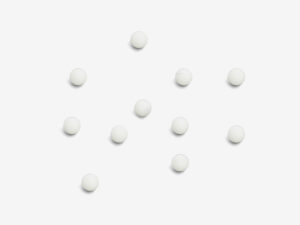
- This is not a good idea if the bead is in the diffusion path. The bead needs to be sitting down against the porous plastic membrane (Teflon disc) that retains the desiccant. If not, it could violate the assumption of 1-D vapor diffusion between the two vapor pressure sensors. That diffusion path doesn’t have to be perfectly vertical, but it needs to be vertical enough to ensure the bead is out of the way.
- Can silica gel be used as desiccant in place of the molecular sieve desiccant, for the leaf porometer sensor head?
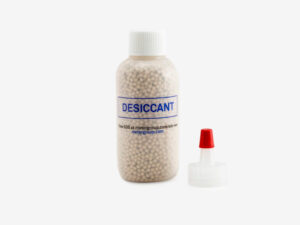
- Silica gel works. It doesn’t last as long or scrub down as fast as the molecular sieve desiccant. You can use silica gel in place of the molecular sieve desiccant, but be prepared to need to change the silica gel more often and expect possibly longer shake down times. Non-indicating molecular sieve desiccant can also be used. Use 10-20 mesh size.
- How often should the SC-1 be calibrated when taking readings out in the field?
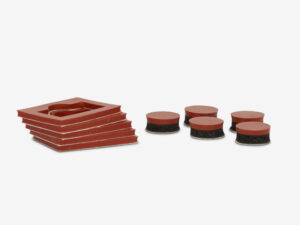
- Verify the measurement accuracy daily or after a change in field conditions. This is done by using the calibration plate and moist filter paper. Recalibrate when the measurement falls outside of the expected range. When calibrating in the field, wind gusts can dry out the filter paper faster, so try to perform the calibration in a sheltered area from wind. Use the SC-1 case to protect the calibration plate from drying out fast, and also turn the calibration plate upside down between calibration points, so it doesn’t dry out as quickly. As long as you have fresh desiccant and have performed any necessary maintenance, then you should expect the SC-1 system to calibrate in a stable environment. If you put the sensor head on a different SC-1 handheld, then recalibration is required. The reason is that the calibration for the sensor head is stored in the hand-held device.
- What type of calibration filter paper should be used for the SC-1?
- Use Whatman #3 filter paper and use a hole punch to make the correct-sized discs. If you use a different type of filter paper, then verify with the Whatman #3 that the substitute filter paper gives the same expected results.
- What should I do if the SC-1 will not connect to a computer using the cable adapter?
-
1. Download the METER USB driver.
2. Download the Leaf Porometer Utility.
3. Connect the Serial to USB cable adapter from the hand-held to a computer.
4. Turn on the SC-1 hand-held, Open Utility, and find the appropriate communication port the drop-down menu.
5. Select Download.
- Where can I purchase new desiccant?
- See this page for information about the molecular sieve desiccant that ships with the SC-1. You can order more from METER or from any other source that meets the desiccant specifications.
- What should I do if the SC-1 calibration is abnormally slow (1+ hours) and the calibration is unsuccessful after multiple attempts?
-
1. Set the instrument and calibration supplies in measurement environment before calibrating for 10+ minutes. Replace desiccant and follow the calibration instructions in the SC-1 Calibration quick start.
2. If unsuccessful, replace Teflon filter and then try calibrating.
3. If unsuccessful still, conduct cleaning and maintenance shown in the maintenance video, and then try calibrating.
4. If unsuccessful still, contact METER for further troubleshooting or to request an RMA to send it in for repairs.
- How do I put the spring back in after doing maintenance on the porometer?
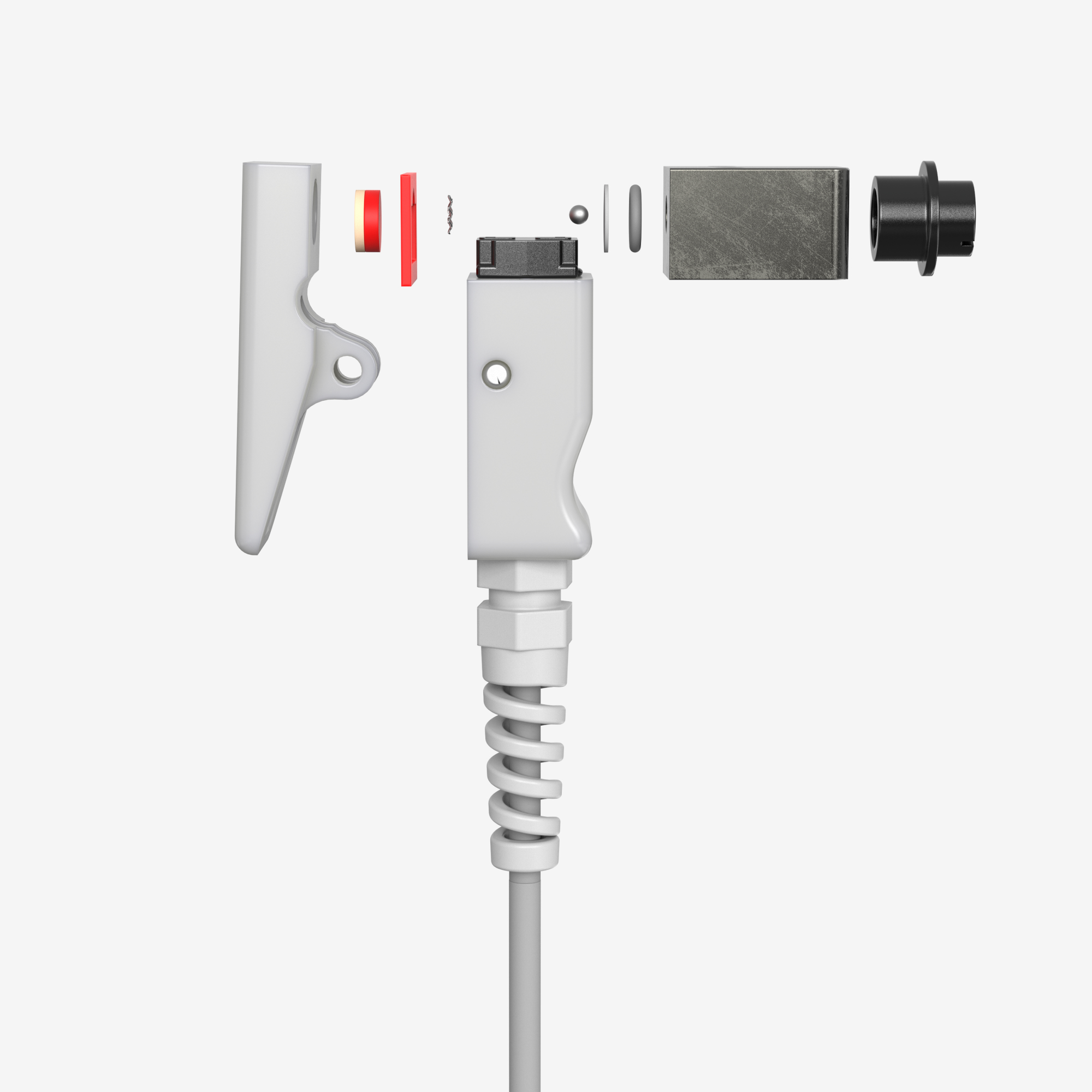
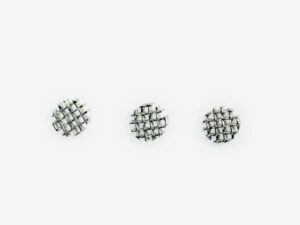
- Position the spring in the sensor head. Then, insert the pin to secure the spring. Watch our maintenance video, and it will walk you through reassembling your sensor head with the proper bead and screen placement.
- I get the message “initial conductance too high” before I take a measurement. Is that normal, and what could be the cause?
- The SC-1 will give you the message “initial conductance too high” between every reading. This is normal operation of the sensor. The sensor head needs approximately 30 seconds to 1.5 minutes of shaking to return to a state where it can begin another reading. It is not a problem but part of the design of the sensor. The chamber must have an RH below 10%, and the stomatal conductance must be 0 to clear the message “initial conductance too high”. When you receive that message, the stomatal conductance is not yet 0, and you must continue shaking the sensor head to equilibrate the chamber. Refer to the SC-1 quick start, SC-1 Calibration quick start, and SC-1 calibration video for operating instructions.
- Do I need to put a bead in my new leaf porometer?
- You do not need to replace the bead unless the screen and bead fall out. You should have spare screens in your porometer kit. Watch our maintenance video, and it will walk you through reassembling your sensor head with the proper bead and screen placement.
- Why does the SC-1 sensor head and diffusion path need to be vertical when taking measurements?
- If the bead is in the diffusion path, it needs to be sitting down against the porous plastic membrane that retains the desiccant. If not, it could violate the assumption of 1-D vapor diffusion between the two vapor pressure sensors. That diffusion path doesn’t have to be perfectly vertical, but it needs to be vertical enough to ensure the bead is out of the way.
- Can the SC-1 provide accurate leaf temperature data?
- While the leaf and sensor head come into thermal equilibrium quickly, the temperature reported by the sensor may not be a good proxy for the leaf temperature in equilibrium with the environment. The clip most likely warms the leaf slightly when the clip is placed on the leaf. This is not important for the reading of stomatal conductance because all that matters there is that the leaf and chamber are the same temperature. But it does matter if you want to use that reading to calculate transpiration. I recommend using an infrared thermometer to get a leaf temperature before placing the sensor head on the leaf for the best leaf temperature measurement.
- Why doesn’t the leaf porometer output transpiration?
- The SC-1 Leaf Porometer measures the vapor flux to arrive at stomatal conductance, which on the surface gives you leaf level transpiration. However, the leaf chamber of the SC-1 forces its own environment on the leaf, so the chamber steady-state transpiration will likely differ significantly from the environment steady-state transpiration. This is fine for stomatal conductance since the reading is taken within 30 seconds, but it doesn’t work for transpiration. We recommend you use independent atmospheric vapor pressure and leaf temperature measurements coupled with an estimate of leaf boundary layer conductance to calculate transpiration from the stomatal conductance measurement made with the SC-1.
-
Resources / Publications
-
Resource links
- How to find crop coefficients for irrigated grapevine production
- How to measure leaf transpiration
- Webinar: Water management—Plant-water relations and atmospheric demand
Support
- SC-1: best practices for measuring vineyard stress
- Manuals and software
- VIDEO: SC-1 Calibration
- VIDEO SC-1 Repair and Maintenance
Case studies
- Piñon Pine: Studying the effects of climate change on drought tolerance
- Irrigation curves—a novel irrigation scheduling technique
- Irrigation and Climate Impacts to the Water-Energy Balance of the WI Central Sands
- Gore-Tex, house wrap, and stomatal conductance
- Can Canopy Measurements Determine Soil Moisture?
-
Selected Publications
Listed below are a few examples of cited publications for the SC-1 leaf porometer. This list is not exhaustive.
2020
- Carrasco-Benavides, Marcos, Javiera Antunez-Quilobrán, Antonella Baffico-Hernández, Carlos Ávila-Sánchez, Samuel Ortega-Farías, Sergio Espinoza, John Gajardo, Marco Mora, and Sigfredo Fuentes. “Performance Assessment of Thermal Infrared Cameras of Different Resolutions to Estimate Tree Water Status from Two Cherry Cultivars: An Alternative to Midday Stem Water Potential and Stomatal Conductance.” Sensors 20, no. 12 (2020): 3596. (Article link).
- Carvalho, Henrique DR, James L. Heilman, Kevin J. McInnes, William L. Rooney, and Katie L. Lewis. “Epicuticular wax and its effect on canopy temperature and water use of Sorghum.” Agricultural and Forest Meteorology 284 (2020): 107893. (Article link).
- Mota-Gutiérrez, Dilia, Guadalupe Arreola-González, Rafael Aguilar-Romero, Horacio Paz, Jeannine Cavender-Bares, Ken Oyama, Antonio Gonzalez-Rodriguez, and Fernando Pineda-García. “Seasonal variation in native hydraulic conductivity between two deciduous oak species.” Journal of Plant Ecology 13, no. 1 (2020): 78-86. (Article link).
- Ravi, Sridevi, Tim Young, Cate Macinnis-Ng, Thao V. Nyugen, Mark Duxbury, Andrea C. Alfaro, and Sebastian Leuzinger. “Untargeted metabolomics in halophytes: The role of different metabolites in New Zealand mangroves under multi-factorial abiotic stress conditions.” Environmental and Experimental Botany 173 (2020): 103993. (Article link).
2019
- Matthews, Craig, Muhammad Arshad, and Abdelali Hannoufa. “Alfalfa response to heat stress is modulated by microRNA156.” Physiologia plantarum 165, no. 4 (2019): 830-842. (Article link).
- Sanad, Marwa NME, Andrei Smertenko, and Kimberley A. Garland-Campbell. “Differential dynamic changes of reduced trait model for analyzing the plastic response to drought phases: a case study in spring wheat.” Frontiers In Plant Science 10 (2019): 504. (Article link).
- Westerband, Andrea C., Aurora K. Kagawa-Viviani, Kari K. Bogner, David W. Beilman, Tiffany M. Knight, and Kasey E. Barton. “Seedling drought tolerance and functional traits vary in response to the timing of water availability in a keystone Hawaiian tree species.” Plant Ecology 220, no. 3 (2019): 321-344. (Article link).
2018
- Panta, Suresh, Tim Flowers, Richard Doyle, Peter Lane, Gabriel Haros, and Sergey Shabala. “Temporal changes in soil properties and physiological characteristics of Atriplex species and Medicago arborea grown in different soil types under saline irrigation.” Plant and Soil 432, no. 1-2 (2018): 315-331. (Article link).
- Soderquist, B. S., K. L. Kavanagh, T. E. Link, M. S. Seyfried, and A. H. Winstral. “Simulating the dependence of aspen (Populus tremuloides) on redistributed snow in a semi‐arid watershed.” Ecosphere 9, no. 1 (2018): e02068. (Article link).
- Tan, Puay Yok, Nyuk Hien Wong, Chun Liang Tan, Steve Kardinal Jusuf, Mei Fen Chang, and Zhi Quan Chiam. “A method to partition the relative effects of evaporative cooling and shading on air temperature within vegetation canopy.” Journal of Urban Ecology 4, no. 1 (2018): juy012. (Article link).
2016
- Galieni, Angelica, Fabio Stagnari, Stefano Speca, and Michele Pisante. “Leaf traits as indicators of limiting growing conditions for lettuce (Lactuca sativa).” Annals of Applied Biology 169, no. 3 (2016): 342-356. (Article link).
- Özmen, Selçuk. “Quantification of Leaf Water Potential, Stomatal Conductance and Photosynthetically Active Radiation in Rainfed Hazelnut.” Erwerbs-Obstbau 58, no. 4 (2016): 273-280. (Article link).
- Valenzuela, Patricio, Eduardo C. Arellano, James A. Burger, and Pablo Becerra. “Using facilitation microsites as a restoration tool for conversion of degraded grasslands to Nothofagus forests in Southern Patagonia.” Ecological Engineering 95 (2016): 580-587. (Article link).
- Winkler, Daniel E., Yukihiro Amagai, Travis E. Huxman, Masami Kaneko, and Gaku Kudo. “Seasonal dry-down rates and high stress tolerance promote bamboo invasion above and below treeline.” Plant Ecology 217, no. 10 (2016): 1219-1234. (Article link).
215
- Galieni, Angelica, Carla Di Mattia, Miriam De Gregorio, Stefano Speca, Dino Mastrocola, Michele Pisante, and Fabio Stagnari. “Effects of nutrient deficiency and abiotic environmental stresses on yield, phenolic compounds and antiradical activity in lettuce (Lactuca sativa L.).” Scientia Horticulturae 187 (2015): 93-101. (Article link).
- Rahman, M. A., D. Armson, and A. R. Ennos. “A comparison of the growth and cooling effectiveness of five commonly planted urban tree species.” Urban Ecosystems 18, no. 2 (2015): 371-389. (Article link)
2015
- Qiu, Rangjian, Taisheng Du, Shaozhong Kang, Renqiang Chen, and Laosheng Wu. “Influence of water and nitrogen stress on stem sap flow of tomato grown in a solar greenhouse.” Journal of the American Society for Horticultural Science 140, no. 2 (2015): 111-119. (Article link).
2014
- Rud, Ronit, Y. Cohen, V. Alchanatis, A. Levi, R. Brikman, C. Shenderey, B. Heuer et al. “Crop water stress index derived from multi-year ground and aerial thermal images as an indicator of potato water status.” Precision Agriculture 15, no. 3 (2014): 273-289. (Article link).
- Secchi, Francesca, and Maciej A. Zwieniecki. “Down-regulation of plasma intrinsic protein1 aquaporin in poplar trees is detrimental to recovery from embolism.” Plant Physiology 164, no. 4 (2014): 1789-1799. (Article link).
2013
- Benigno, Stephen M., Kingsley W. Dixon, and Jason C. Stevens. “Increasing soil water retention with native‐sourced mulch improves seedling establishment in postmine Mediterranean sandy soils.” Restoration Ecology 21, no. 5 (2013): 617-626. (Article link).
- John-Bejai, C., A. D. Farrell, F. M. Cooper, and M. P. Oatham. “Contrasting physiological responses to excess heat and irradiance in two tropical savanna sedges.” AoB Plants 5 (2013). (Article link).
2012
- Touchette, Brant W., Emily C. Adams, Parker Laimbeer, and Gabrielle A. Burn. “Ridge crest versus swale: contrasting plant–water relations and performance indexes in two understory plant species in a coastal maritime forest.” Journal of Plant Interactions 7, no. 3 (2012): 271-282. (Article link).
2011
- Jørgensen, S. T., W. H. Ntundu, M. Ouédraogo, J. L. Christiansen, and F. Liu. “Effect of a short and severe intermittent drought on transpiration, seed yield, yield components, and harvest index in four landraces of bambara groundnut.” International Journal of Plant Production 5 (2011): 1. (Article link).
- Rahman, M. A., J. G. Smith, P. Stringer, and A. R. Ennos. “Effect of rooting conditions on the growth and cooling ability of Pyrus calleryana.” Urban Forestry & Urban Greening 10, no. 3 (2011): 185-192. (Article link).
2009
- Espino, Susana, and H. Jochen Schenk. “Hydraulically integrated or modular? Comparing whole‐plant‐level hydraulic systems between two desert shrub species with different growth forms.” New Phytologist 183, no. 1 (2009): 142-152. (Article link).
-
Accessories




Request a quote
Fill out the form below to help us pair you with the right expert. We’ll prepare the information you request, then contact you as soon as possible.