CDX—the new era of soil moisture sensing: reliable accuracy regardless of salinity
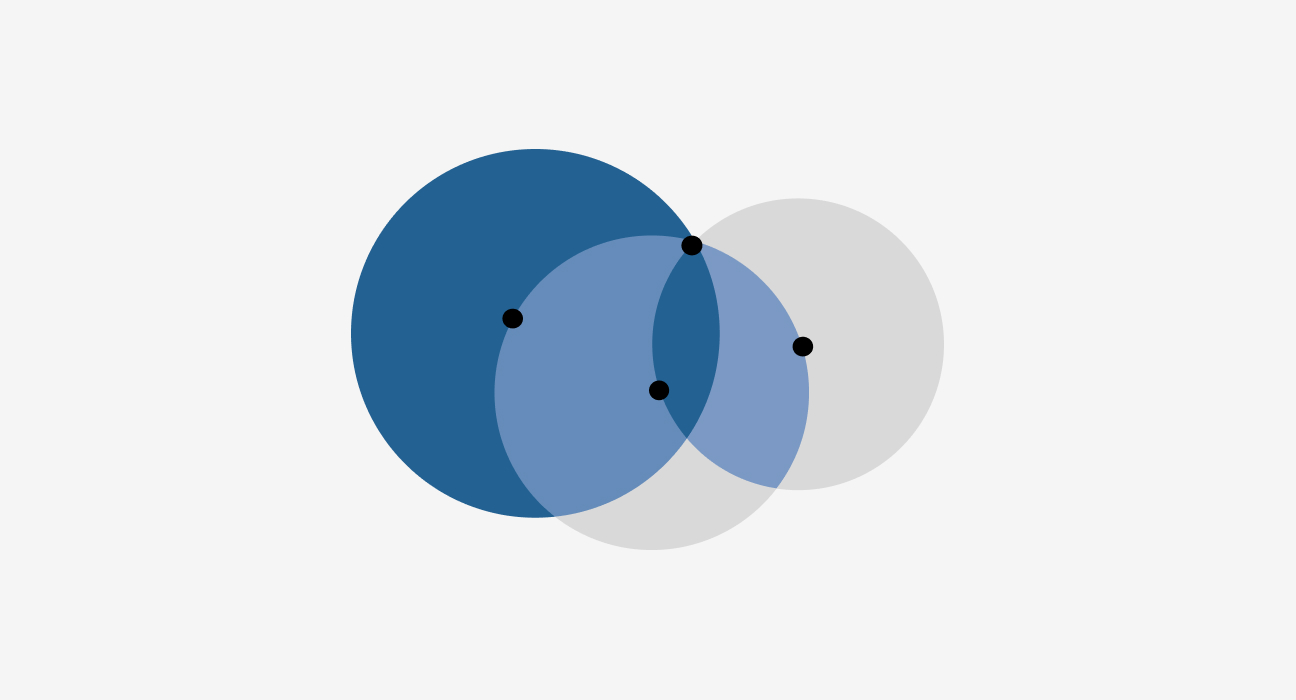
Complex dielectric through intersections (CDX) is changing what’s possible in the world of soil moisture measurement. CDX sensors are now able to measure the real dielectric permittivity of a medium, providing measurements that are unaffected by most salinities.
Watch this 30-minute webinar from METER Director of Scientific Outreach Leo Rivera to learn how this next generation of methods and sensors works, why these advancements matter, and how it will impact agriculture, environmental science, engineering and more. He will explain:
- Why soil moisture measurements can become unreliable as saline levels increase
- The science behind real vs. apparent dielectric permittivity and why it matters
- How breakthrough dielectric permittivity measurement methods separate moisture from the effects of salinity
- What this new class of sensors means for long-term deployments
- And more
Presenter
Leo Rivera is a research scientist and Director of Science Engagement at METER Group. He earned his Bachelor’s and Master’s degrees in Soil Science at Texas A&M University. There he helped develop an infiltration system for measuring hydraulic conductivity used by the NRCS in Texas. Leo is the force behind application development in METER’s hydrology instrumentation, including the SATURO, HYPROP, and WP4C. He also works in R&D to explore new instrumentation for field measurements of water content, water potential, and hydraulic properties of soil.
Next steps
- Educational Guide: The researcher’s complete guide to soil moisture
- Measure soil moisture with the SOLYX 14
- Related webinar: How to get the most accurate soil moisture data
- Podcast: Episode 34: Bushfires, the Great Barrier Reef, and white-bellied frogs
- Request a ZENTRA Cloud live demo
- Follow us on LinkedIn: https://www.linkedin.com/company/meter-group
Questions?
Our scientists have decades of experience helping researchers and growers measure the soil-plant-atmosphere continuum.
Case studies, webinars, and articles you’ll love
Receive the latest content on a regular basis.
Transcript
BRAD NEWBOLD 0:00
Hello, everyone, and welcome to CDX, the new era of soil moisture sensing, reliable accuracy regardless of salinity. Today’s presentation will be about thirty minutes, followed by about ten minutes of our Q and A with our presenter, Leo Rivera, whom I will introduce in just a moment. But before we start, we’ve got a couple of housekeeping items. First, we want this webinar to be interactive, so we encourage you to submit your questions in the questions pane, and we’ll be keeping track of those for the Q and A session toward the end. Second, if you want us to go back or repeat something you missed, don’t worry. We will be sending around a recording of the webinar via email within the next three to five business days. Alright. With that out of the way, let’s get started. Today, we’ll hear from METER research scientist Leo Rivera, who will introduce METER’s new CDX technology and the SOLYX 14 soil moisture sensor. Leo is a research scientist and director of science engagement at METER Group, and he earned his bachelor’s and master’s degrees in soil science at Texas A&M University, where he helped develop an infiltration system for measuring hydraulic conductivity used by the NRCS in Texas. Leo is the force behind application development in METER’s hydrology instrumentation, including the SATURO, HYPROP, and WP4C. He also works in R&D to explore new instrumentation for field measurements of water content, water potential, and hydraulic properties of soil. So without further ado, I’ll hand it over to Leo to get us started.
LEO RIVERA 1:35
Thanks, Brad. And thank you everyone for joining today’s webinar. I’m pretty excited to talk with you about the subject today. So as you know, at METER Group, we’ve been working in the soil moisture sensing world for a long time. And one of our goals is always to continue to advance the measurements and try and improve the tools for making measurements. And so that’s why it’s pretty exciting to talk about complex dielectric measurements, to talk about the CDX technology and how it’s helping us advance our ability to measure soil moisture, especially in more challenging environments. But before we get into that, let’s talk about I always like to start with talking about the importance of what we’re measuring and the parameters that we’re looking at. So the for soil moisture, as we all know, soil moisture is one of the most important variables that we can measure because it influences biological processes, hydrological processes, and physical processes all at the same time.
LEO RIVERA 3:05
In agriculture, it helps us guide irrigation and helps us improve crop performance, and it helps us reduce losses of water and nutrients and other inputs in those systems. In environmental research, soil moisture is central to understanding drought, runoff, recharge, plant water interactions, and ecosystem responses. And in engineering, it matters because water content strongly affects soil strength. It affects soil stability and deformation. And of course it also affects drainage behavior in soils. So across all three areas, soil moisture is not just a useful measurement, but it’s a foundational variable for decision making and system performance. Because of that, we need more powerful tools to help us make these measurements.
LEO RIVERA 4:35
And so continuing on with the basics, let’s just again, what is water content? What is soil moisture? What are we talking about here? So oftentimes when we talk about soil moisture, we talk about water content versus water potential. Today, we’re just gonna focus on water content, which is the amount of water or what often we refer to it as the extensive variable in soil. And so in its basics form, we can often refer to it in its volumetric or gravimetric base. Today, we’re gonna focus on volumetric water content, which of course is in its very simplest form is the total volume of water per volume of soil. So here, if you picture the diagram on the right here, you can imagine as the water content changes, the primary thing that’s changing is the ratio of the air to water fraction that’s filling those pore spaces and soil. So very simple concept, not always so simple to measure, especially in challenging environments.
LEO RIVERA 6:25
And so let’s talk a little bit about the history of making soil moisture measurement. So for most of the last century, soil moisture measurements have evolved in, I would say pretty clear stages. So first it started with more destructive but accurate laboratory methods. Where for example, where we’re taking soil samples and bringing them back, drying them in the oven and getting our water contents that way. We also had the evolution of tensiometers around the same time. So it was between nineteen twenty and nineteen forty. That also helped us measure water potential, but they were still very limited in their use, especially because you were having to come out and manually make both measurements. None of this was being logged over time. So then we had the stage of more practical field measurements, and this included the development of things like gypsum blocks, electric resistance probes, things like that. And of course, neutron probes that were developed around that same time as well.
LEO RIVERA 8:25
But with both of these tools, they had their limitations. Neutron probes were a really powerful tool because they gave us nondestructive profile measurements of soil moisture. And these electrical resistance blocks gave us a tool for trying to actually monitor soil moisture without making destructive measurements, but they were of course still limited in their scope. Then we had what came along what we refer to as the dielectric era of making soil moisture measurements. And this is where we’re starting to use the principle of dielectric permittivity to measure soil moisture. We’ll dive a little bit deeper into what that is, but let’s talk about the the how this evolves. So we all are familiar with TDR or time domain reflectometry, which was first applied to soil water measurements in nineteen eighty. We’re all familiar with Clarke Topp and the Topp equation and all the work that was done there.
LEO RIVERA 10:15
We also had the evolution of FDR and capacitance based methods, which broadened our ability to make soil moisture measurements, helped increase our ability to make soil moisture measurements across a larger scale. And for both these techniques, this enabled us to make electronic in situ sensing of soil moisture continuously over time. Then our next era came about, which is really what we are to is we are connected and scalable era. So now we’re taking these in situ sensors that have been developed, but making them more connected, making that we’re using IoT platforms and tools to help us transmit the data wirelessly. So may and so that made our data more accessible. And we also had the evolution of tools for remote sensing like satellite. We also have COSMOS things like that, that allowed us to extend soil moisture monitoring from fields from point scale to field scale, regional scale, global scale. So really broadening our ability to measure soil moisture. Now, of course, all of these still had their limitations, whether it needed ground truthing or just limitations with the measurements themselves.
LEO RIVERA 12:20
And so as we continue to evolve and try and make better measurements, then came about what we’re now referring to as our complex dielectric technology that is being released in twenty twenty six. And this is an example of our goal of trying to continue to push and improve our soil moisture measurements beyond what their current capabilities are enabling us to make measurements in more challenging environments and more challenging conditions, and just continuing to learn from what we’ve learned over the past hundred years in trying to make soil moisture measurements to try and make the tools better. So let’s go back again. Now let’s talk about dielectric permittivity. So we refer to this dielectric era of making soil moisture measurements. This looking at dielectric permittivity is now the most common way of measuring soil moisture in situ. But how are we doing this? So here we have a scale of one to eighty, and this shows where the typical things that we find in soil, so air, organic matter, soil minerals, ice, and water fall along that scale.
LEO RIVERA 14:30
So you see here that air has a dielectric permittivity of one, organic matter has a dielectric permittivity between two and three, soil minerals have a dielectric permittivity of around four, and ice has a dielectric permittivity of around five. Then we have water that has the dielectric permittivity of eighty. And so because water has a much greater ability of storing charge, we can use this measurement of dielectric permittivity to measure how much water is actually being stored in the soil continuously. So it’s a really powerful tool for making these measurements, but of course it still had its limitations. So over the last thirty to forty years, we’ve been working on making measurements like this. And we’ve learned a lot over the years. And that led to the development of what we kind of refer to as our flagship line of tools for measuring soil moisture. Here you see an example on the top of our tools for measuring water potential in situ. So the TEROS 21, TEROS 31, and TEROS 32.
LEO RIVERA 16:35
These are tools for measuring water potential. And we see our line of our TEROS line of the TEROS 10, 11, and 12, and the TEROS 54 for measuring a water content in situ. These sensors have been out for a long time. They’ve been used in research. They’ve been used in the field for close to ten years now. And they’ve have proven to be a powerful tool for making these measurements, but they still had their limitations. And we’ve learned a lot from making these tools over the years. Let’s talk about some of those measurement challenges. So unfortunately we know that there are challenges with measuring soil moisture in situ. One of the big challenges is measuring soil moisture in saline soils. So one of the challenges with measuring soil moisture in saline soils is that the electrical conductivity of that soil can actually affect the electromagnetic response. So if we were working in a non conductive system, we wouldn’t have any challenges making soil moisture measurements because there would be nothing to actually take any of that charge away. But once you start adding salinity to the system, then we wind up with a lossy system where we’re losing some of that charge to the salinity of the soil.
LEO RIVERA 19:05
And so you kinda can see an example of that. So in soil, we know that it’s not just a perfect capacitor. And so we have the resistance that we lose in the system due to the electrical conductivity of the soil, and that therefore impacts our measurement using and impacts the electromagnetic response. Now we’ve been able to make measurements in most environments still fairly well, typically up to about seven to ten decisiemens pore water EC or saturated extract EC around that. And still have been able to make these measurements, but there’s been many conditions where we’ve struggled to make these measurements. Other challenges with measuring soil moisture, and this goes, is that apparent permittivity is not always a true water signal. And this again goes back to the issue with the loss-ness of both clays and the conductive soil with the salts.
LEO RIVERA 21:00
Other challenges that universal calibrations can also be inadequate at times depending on some other challenges with your soil. We’ll talk a little more about the conductivity challenges, but we also know that depending on the frequency that your probe operates and some of these other things that you can struggle with using a universal calibration to get good water content measurements. And so sometimes you have to do soil specific calibrations and things like that. And some other things that we’ve seen is that temperature and salinity interactions can also compound error as well. So these are all challenges that we’re aware of in making these measurements. And so we’re always working at trying to find ways to overcome some of these challenges. And so for us, that meant working on a new technology to make these measurements. And that new technology is now what it goes into our SOLYX 14 soil moisture sensor. And so this is a new tool that we’ve released for making soil moisture measurements in situ that builds on what we’ve learned over the last thirty to forty years of making soil moisture measurements.
LEO RIVERA 23:10
So let’s talk about complex dielectric measurements. So, and how the SOLYX 14 is making these measurements. So again, we refer to this as CDX and we’ll dive a little bit deeper into why we call it CDX here in just a bit, but complex dielectric measurements allow us to separate the real and the imaginary portion of the dielectric permittivity. The real portion is that portion of the measurement that’s not affected by salts in the soil, so that we’re not losing any of that ability to store charge. And then the imaginary portion is what’s affected by the salts. And so these complex dielectric measurements allow us to actually separate those two parameters out and get to the real dielectric permittivity, which is ultimately what we’re trying to measure. For us, this approach is really our next generation, that next push in continuing to improve our ability to make soil moisture measurements.
LEO RIVERA 25:00
And what’s great is, of course, in typical soils, we know that the existing technology that is out there works well in what we would call typical soils. So non atypical minerals like allophane, so avoiding things like allophane and some of those other types of things that can impact measurements and non highly conductive systems. In these systems, of course, these sensors are gonna perform similarly. There are other improvements that we’ve made in the technology as well, like trying to do things like reducing sensor to sensor variability, which is always another key thing that we’re trying to push on. That also helps improve the accuracy of our measurements. But ultimately, you’ll see fairly similar performances in typical soils, but really where this technology is gonna set itself apart is in saline soils, which is where it is really designed to improve our measurement reliability compared to the earlier technologies and expand our ability to make measurements in these challenging environments.
LEO RIVERA 27:00
So, like I said, we’ve been making soil moisture measurements for the last thirty to forty years, and we’ve learned a lot over that time as well. And we’ve tried to bring some of those experiences into other aspects of what went into the SOLYX 14. And some of those key things are really trying to improve the durability of the sensor. And so some of the things that we worked on is improving the pin durability. So the SOLYX 14 has a new pin that improves the overall strength at the connecting point with the board. It also has a thicker, more robust needle overall. And so trying to improve our capabilities there, but also one of the key failure points that we see in soil moisture sensors is the cable. And so we also worked on a new cable design with a braided metal inner layer to help protect the cable from potential abrasion and damage rodents. And we also moved from a PVC to a polyurethane jacket that allowed us to manipulate the cable a little bit better. Now, having said that cable protection with conduit is still critical for a lot, especially for long term monitoring applications.
LEO RIVERA 29:20
No cable is impervious to rodents. And so we wanna make sure that you’re still protecting your cable, but we’re continuing to try and make improvements in that strength and the ability of the cable to survive some of those things. So we see less failure of our soil moisture measurements over time. Other things we always continue to try and focus on with these measurements is trying to improve our volume of influence. So as we know, soil moisture is a spatially variable parameter. So the bigger volume that we can measure in soil, especially in the field, the better job we’re gonna do encompassing some of that variability. And so here you see an example of how this probe is measuring on the right. So we have our active pin in the middle and then our two grounding pins on needle one and two, so the two outer needles. And what that does for us is it creates a sensor with a pretty large volume of influence. So this sensor has about an eight hundred eighty cubic centimeter volume of influence, which is great trying to make sure that we maintain a good volume of influence with this measurement.
LEO RIVERA 31:30
You also see that the thermistor, so our temperature measurement is located on the circuit board in the body. And so by doing that, that helps make sure that everything we have traditionally put the temperature sensor in the needle, but it actually reduces the strength of the needle. So by moving it to the board, because our temperature measurements are in the soil, we don’t need to have that temperature measurement in the needle. It’s going to measure the soil temperature just as well in the body as it does in the needle. Okay. So now we’ve talked about kind of some of the improvements we’ve made with the SOLYX 14 and a little bit of an introduction into the CDX technology. Let’s talk about what the CDX technology actually is. So we talked about the impact that salts have on the dielectric permittivity measurement. So measuring dielectric permittivity in a conductive sample actually forms a complex number where we have the real portion of or the soil’s actual ability to hold a charge, which is what’s represented on the x axis here. And then we have the imaginary portion or the lossy portion represented on the y axis here, which is our imaginary portion of the dielectric permittivity. And so we see that what we’re measuring, our apparent dielectric permittivity or the admittance of the measurement is a complex number of those two measurements.
LEO RIVERA 34:00
And so using complex math allows us to actually represent this relationship with where the admittance or the dielectric permittivity falls in this plane. And if we can do that, we can use geometry to actually solve and determine what the real and imaginary quantities are and accurately measure both. So let’s dive a little bit deeper into how that’s actually done. So the SOLYX 14 or our CDX technology uses what we call the four-voltmeter method. And so with this method, we have a circuit where we have three reference components. We have a resistor, an inductor, and a capacitor within that system. And then we have a fourth voltage measurement that’s going through the soil. And because we know the values for these reference components, we can determine where they fit within this admittance plane. And then by measuring the voltage amplitudes or these voltage ratios of the reference components versus the soil, we can actually determine the scale of these circles or where the radius of these circles and identify where these circles intersect on this admittance plane. And so then the sample admittance is then computed as a weighted average of the three intersections.
LEO RIVERA 36:30
And so ultimately what we’re doing is using these known components and using them to identify where our measurement falls on this admittance plane, which allows us to then solve and iterate and determine the imaginary and the real portion of the dielectric permittivity. Something else that’s really cool about this measurement, because we know these reference components, what the value should be, we also have the ability to determine what we call the self-consistency of the sensor. Ultimately, this is an internal QA/QC check for the sensor circuitry, which is making sure that it’s actually operating properly and measuring like it’s supposed to. And so this is the basic concept of how this technology works, allowing us to actually separate the imaginary and the real portion of the dielectric. And then getting our real dielectric, and then also getting our electrical conductivity by knowing that imaginary portion of the dielectric permittivity as well.
LEO RIVERA 38:25
So this is great. Now we get an accurate measurement of dielectric permittivity, but ultimately we need to take that dielectric permittivity measurement and convert that to a water content. And so here you see the calibration equation that we’ve developed for all of the CDX platform. And because we have tools now that we can accurately estimate the dielectric permittivity, we can develop a singular equation that can be used across the CDX platform. So you’ll see some future sensors coming out like a portable SOLYX GO sensor that will all utilize the same calibration equation to convert from dielectric permittivity to water content. And so this gives us a singular equation across range of soils. Does that mean we’ll never need to do custom calibrations? No. This is trying to cover a broad range of soils. And if we want to improve our accuracy, we can always do a custom calibration for a site to really hone in on our accuracy. But what this gives us is a really good equation for taking our dielectric permittivity measurement and using that across a broader range of soils to get an accurate water content estimate.
LEO RIVERA 40:50
So now that we’ve talked about the technology and all the improvements, what does that actually look like in real life? And what are we actually seeing from the measurements and what are we learning? What improvements, how is this actually improving our ability to make soil moisture measurements in these challenging environments? And of course, I’ve already hit on this a lot. We’re gonna focus on measuring in saline soils because that’s one of the most challenging areas to make measurements of soil moisture. And we’re seeing bigger issues with salinity and soils, and we need to make these measurements in these environments, but we need tools that can handle them. So let’s focus on our traditional technology first. So here we see an example of water content estimates from the TEROS 12 sensors, and you have the measured water content on the x axis and the actual water contents on the y axis. And we have five different soils here, native golf sand, a four decisiemens per meter golf sand, and a ten decisiemens per meter golf sand. Sorry, a ten, a thirty, and a fifty decisiemens per meter golf sand. So this is saturated extract EC of these soils.
LEO RIVERA 43:10
And what you see is from the native up to about ten decisiemens per meter, we still get pretty good performance of the water content estimates with this technology. But once we start to get beyond that, we start to see degradation in the measurement, which is to what we’ve known. We’ve seen this challenge before. And we’ve always known that this has been a challenging environment, challenging condition to make soil moisture measurements and especially with most sensors that are out there. We can develop custom calibrations in these conditions to try and make better soil moisture measurements if we needed to. But if the salinity changes over time or other things change, then that custom calibration may no longer be valid for this environment. So really what we need to do is develop a sensor that is not gonna be sensitive to these issues. And that’s where we wanted to test the CDX technology and the SOLYX 14 to see how it performed in these same conditions.
LEO RIVERA 45:15
So here you see a graph on the right with the CDX sensor, the SOLYX 14, again, same measurements, the same soil types, the way up to fifty deciSiemens per meter. And what you see is we see a much better measurement of water content across that range of soils. We see very little impact on accuracy from the salinity of those soils compared to the traditional technology. And so really what this does is this opens up our ability to make these measurements in these challenging environments without the need of custom calibrations and ultimately being able to apply these sensors with very, very little challenge across these conditions and get accurate measurements of water content. So water content measurements are great. Being able to measure in these conditions is fantastic. What else do we want to try and understand?
LEO RIVERA 47:00
So soil moisture sensors for a long time have always output a bulk electrical conductivity measurement. Bulk electrical conductivity is really hard to interpret without more information about what’s going on. It changes with water content, and without understanding more components of the system, it’s really hard to interpret what that bulk electrical conductivity measurement actually means. And so that’s where models like pore water EC models were developed to actually help improve our understanding of the conductivity of that system. So here we see the pore water equation from the Hilhorst two thousand equation. And what we’re trying to do here is instead of measuring bulk electrical conductivity, we’re trying to take that bulk electrical conductivity measurement and estimate the actual EC of the pore water, which is way more informative, especially for trying to understand how this could be potentially impacting plants and microorganisms.
LEO RIVERA 49:00
What you see going into this equation here is to determine the pore water EC sigma w, we need to measure the real dielectric permittivity of the soil pore water. We need to measure the bulk electrical conductivity, which we can do. We need measure the real dielectric permittivity of the bulk soil. And we also need to know the real dielectric permittivity when the bulk EC is zero. So the measurements we’re actually making to do this computation is the real dielectric permittivity of the bulk soil and the bulk electrical conductivity. And then we estimate the real dielectric permittivity of the soil pore water based on the temperature. And then we set a known value of real dielectric permittivity, first thing would be usually around four, which is just a set constant. But again, it’s the real dielectric permittivity that we need to be measuring, not the apparent and not the imaginary. So when you’re measuring apparent dielectric permittivity, you’re impacting your dielectric permittivity measurement, which therefore adds error to your pore water EC estimates. So it’s always made this a little more challenging, especially as water contents get lower.
LEO RIVERA 51:30
So if we can improve our ability to estimate the real dielectric permittivity, we can then improve our ability to measure pore water EC, which is a far more powerful tool for trying to understand the saline and the salt conditions in our soil and how that’s impacting plants and microorganisms. So let’s look at an example of how this is actually improving our pore water EC estimates. So here we see an example of a Rockwool growing medium. Rockwool has a really high water holding capacity up to about ninety eight percent. It’s used often in indoor growing applications for growing things like tomatoes and those types of plants. And it’s a great growing media, but we also need to understand the pore water EC in this medium. And so here we see an example of three different pore water EC conditions. On this graph, we have the water content on the x axis and then the pore water EC estimates on the y axis.
LEO RIVERA 53:30
The solid line represents what the actual solution EC should be. And then the dots represents the measurements from the CDX technology. And here, what we see is across the range of water contents, we do a really good job of estimating the pore water EC using the CDX sensors. Okay. That’s great. Rockwool is a simpler system to measure in and because it holds so much water, it’s a higher water content, so that helps improve our pore water EC model. What about when we go to drier systems? How well can we estimate pore water EC in these drier systems? So now let’s focus on a sandy soil. So another condition or another site where we might wanna know pore water EC is in putting greens and measuring in those sandy soils of putting greens, which can often have lower water contents, which makes doing these pore water EC estimates more challenging.
LEO RIVERA 55:35
So again, we see a similar graph here on the right. We have pore water EC on the y axis and water content on the x axis. And these dash lines represent what the solution EC is in this soil, and the dots represent the pore water EC estimates from the CDX sensors. And so what we see here again is even in what I would consider to be a more challenging environment to make pore water EC estimates is that we still get relatively good estimates of pore water EC across range of water contents, especially once we get above about seven or eight percent volumetric water content. And so again, we have a tool that’s helping improve our ability to estimate the pore water EC, which is gonna give us a more powerful tool to really understand what’s happening in our systems. So we’ve talked a little bit about the CDX technology and kinda what that brings, but looking ahead, there’s still so much that we want to do. So we know that CDX technology is really gonna expand our ability to measure soil moisture in more challenging environments. But we know there’s also more areas that need to be explored.
LEO RIVERA 58:00
We need to understand more about how to normalize the dielectric permittivity to temperature in soils so we can really remove any temperature effects on these measurements, especially in high clay content soils where we see more challenges with the dielectric mixing model there and how temperature impacts what that looks like. And we know that pore water EC is a powerful tool, especially when combined with accurate measurements of real dielectric permittivity. We need to continue to dive into these measurements, learn more about what the pore water EC is telling us and also how these pore water EC models are working and see if we can continue to improve those pore water EC models to then even give us better estimates of pore water EC using the tools that we have now that really gonna help improve our ability to make these measurements. And so with that, I look forward to seeing what continues to happen with these measurements, how the CDX technology is applied and how this continues to expand our ability to make soil moisture measurements across a range of environments. And with that, thank you.
BRAD NEWBOLD 1:00:10
Alright. Thanks, Leo. So we’d like to use the next ten minutes or so to take some questions from the audience. Thank you to everybody who sent in questions already. There’s still plenty of time to submit your questions if you’d like, and we’ll get to as many as we can before we finish. Again, if we don’t answer your question live, we do have them recorded. And Leo or one of our other METER experts will be able to respond directly to your question via the email that you registered with. So let’s look at first question here. And these first couple questions came in during the presentation, so, we might need to go back and review some things. But this first question is asking, how does the sensor separate true water content from salinity induced conductivity effects? Is there any existing advanced technology that works on this principle?
LEO RIVERA 1:01:15
Yeah. That’s a great question. So essentially what we’re doing, and maybe we can jump back a couple slides, is what we’re trying to do is we know that this relationship forms, there are complex numbers that form from this relationship. And so what we here you picture this, the measurement on this admittance plane, where you have the real and the imaginary portion. And using that four-voltmeter measurement, what we’re doing is actually determining where the admittance falls on this plane, which the admittance is directly is the reciprocal of the impedance, which is directly related to the dielectric permittivity. And by solving where this fits on the plane, we can then use geometry to actually determine what the imaginary and real portions are. And so that’s how we’re actually separating that out. There’s some nice equations written up in the theory section of the manual that also help kind of explain this a little bit deeper. But ultimately, what we’re doing is using these four voltage measurements and geometry to separate the imaginary and the real portion of the dielectric.
BRAD NEWBOLD 1:03:00
Okay. Alright. This next one is and you might wanna stay on that slide.
LEO RIVERA 1:03:07
Oh, alright.
BRAD NEWBOLD 1:03:10
This one is asking, do the weighted averages on the admittance plane for our L and C have the same levels of sensitivity across soil types? Are some more accurate than others?
LEO RIVERA 1:03:22
That’s a great question. From what we’ve seen, yes. So we’ve tested this across a range of soils. And what’s great about this measurement is with that self-consistency test, we are also able to look to see if the potential error is increasing from that. And what we see with those SCT value is that even across the range of conditions, range of conductivities, that for all three parts of those measurement, it holds true and we’re getting accurate measurements across a range of soils.
BRAD NEWBOLD 1:04:15
Alright. I did also see some hands being raised. If you wanna add your questions to the questions pane, we should be able to at least try to get to those. Alright. We do have some questions regarding different types of applications with new sensors. That’s always the case. So this first one, they’re saying that they’re interested in using the SOLYX on a coastal beach. Obviously, high salinity environments, and the sediment is comprised of high quartz and basalt content with low clays. Wondering your thoughts on the device in this kind of environment.
LEO RIVERA 1:04:55
Yeah. That’s a great question. That’s exactly the type of environment that we were intending for this device. And so that’s why a lot of the testing that we’ve done has been in similar soils that you would find with similar mineralogy along those coastal environments. And you should see really good performance across these conditions. And that was the goal in developing the sensor was to improve our ability to make measurements in especially coastal estuarine environments, where we know we need soil moisture measurements, but the salts have always made that a little more challenging.
BRAD NEWBOLD 1:05:45
Okay. Here’s a fun follow-up to that same question. So with beach sand saltation, when it’s dry and moving, it generates significant electrostatic charges through friction and collision. Would this impact the sensor in any way?
LEO RIVERA 1:06:00
That is a great question. I am not really certain about that. I don’t because we’re we’re it shouldn’t impact the sensor in terms of its function. So of course, we do a lot of testing to make sure that electrostatic charge isn’t going to impact the measurement. So we do a lot of ESD testing with these types of sensors. And so in terms of impacting the sensor itself, that should not impact the measurement at all. And it also shouldn’t affect the dielectric permittivity measurement either. So I think overall, it should be okay in that type of environment, even with the with some of that phenomena that’s happening that I would like to learn more about.
BRAD NEWBOLD 1:07:00
Yeah. There’s always fun, you know, site specific applications and situations going on. Alright. Looks like we’ve got a couple more questions here. This individual is asking, if a user wants to create a custom calibration, is it possible to embed this conversion in the sensor output, for example, in a data logger? Or is it preferred to make this correction manually during post processing?
LEO RIVERA 1:07:30
Yeah. So that is a great question. We don’t really embed it directly in the sensor output, depending on how you’re reading the sensor. So if you’re reading the sensor with a Campbell Scientific data logger, for example, then what you would do is actually just build that directly into your program. And if you’re using the sensor with a ZL6 data logger and you’re using, for example, ZENTRA Cloud or something like that, we have the ability to put in custom calibrations into ZENTRA Cloud to actually have an output the water content based on your custom calibration. But in all of these instances, essentially it’s gonna be in the post processing because that’s an easier way to input these custom calibrations rather than trying to directly embed it into the firmware of the sensor, which is quite a bit more challenging.
BRAD NEWBOLD 1:08:35
Alright. Looks like we might have time for a couple more questions here. Again, feel free to submit as many questions as you’d like. And if we don’t get to them now live, we will be able to get back to you via email. Okay. Next question. Does the CDX area of influence change with soil type? And also, what is the area of influence around the sensor? If you could go back and review that.
LEO RIVERA 1:09:00
Yeah. So let’s go back to this volume of influence graph here or image. This volume of influence estimate is done using what we call an in-air test to actually determine where that changes. One of the things we do know, and actually there’s a few papers written out there on this, and actually we did a poster on this a while back, is that the volume of influence does change with water content. It does not typically change with soil type, but it does change with water content. And so but that is a much more challenging thing to estimate. And so for our reference, we always use the same test. But what we’ve seen is that it does change with water content, not necessarily soil type. And there’s some good resources, some good literature out there now on how we look at that. I’m happy to share the poster we did and but there’s been some great work done by some folks at Kansas State out of Andres Patrignani’s group looking at this and I know others have worked on this as well.
BRAD NEWBOLD 1:10:25
I was gonna ask follow-up on the literature. We’ve got some questions about that. But, yeah, we can share links and PDFs and all that kind of stuff with those who would like that. Okay. I think we’re gonna wrap it up after this final question. This is gonna be a compound question because we’ve got a bunch of questions. Again, if you could just review the different places and applications where they would want to use a SOLYX 14 over a TEROS 12. So again, in performance in high salinity, low salinity and others as well.
LEO RIVERA 1:11:05
Yeah. No, that’s a great question. You know, the key areas we focused on today were of course, saline environments. And so kind of my rule of thumb there is anywhere when you’re above seven to ten decisiemens saturated extract EC, you’re you would wanna use something like the SOLYX 14. But that’s just one piece of the equation in choosing the sensor that you want to make measurements. We’ve also made other improvements, of course, with the SOLYX 14, improved our durability, and that self-consistency test is a nice QA/QC piece as well. So really anywhere where you need long term reliable soil moisture measurements and a sensor that’s gonna last a long time. Not that the TEROS 12 doesn’t last long time, we’ve made I mean, the TEROS line of soil moisture sensors is very durable and very robust, but we’ve made even greater improvements from there with the SOLYX 14. So really I would recommend for long term monitoring for those types of things. If you aren’t already using TEROS sensors there, I would recommend the SOLYX 14. If you’re already using the TEROS 11 or 12 in your site and you wanna keep using that for your measurements, great. It’s gonna give you great measurements and you’re not gonna see issues there. You will see fairly similar performance between the two in in most normal conditions. But when you get beyond those, the SOLYX and the CDX technology is the way to go. But also, if this is a new site and you need durable long term monitoring, I would push towards the SOLYX 14.
BRAD NEWBOLD 1:13:25
Alright. That’s gonna wrap it up for us today. Thank you again everybody for joining us. We hope that you enjoyed this discussion, and thank you again everybody for all the great questions. There were a ton. That’s gonna be the general term. There are a ton of questions that came in that we did not get to. So again, we do have them recorded, and we’ll pass them on to Leo or to someone else from our METER team to respond directly to your questions. There were a lot of great ones that we did not get to. Please also consider answering the short survey that will appear after the webinar’s finished just to let us know what types of webinars you’d like to see in the future. And for more information on what you’ve seen today, please check us out on YouTube and visit us at METER Group dot com. Finally, look for the recording of today’s presentation in your email, and stay tuned for future METER webinars. Thanks again. Stay safe, and have a great day.