Episode 46: Modeling Desert Water in a Changing Climate
There is both an art and a science to understanding our changing planet, and mastering that intersection requires decades of curiosity, collaboration, and innovation—and experience.
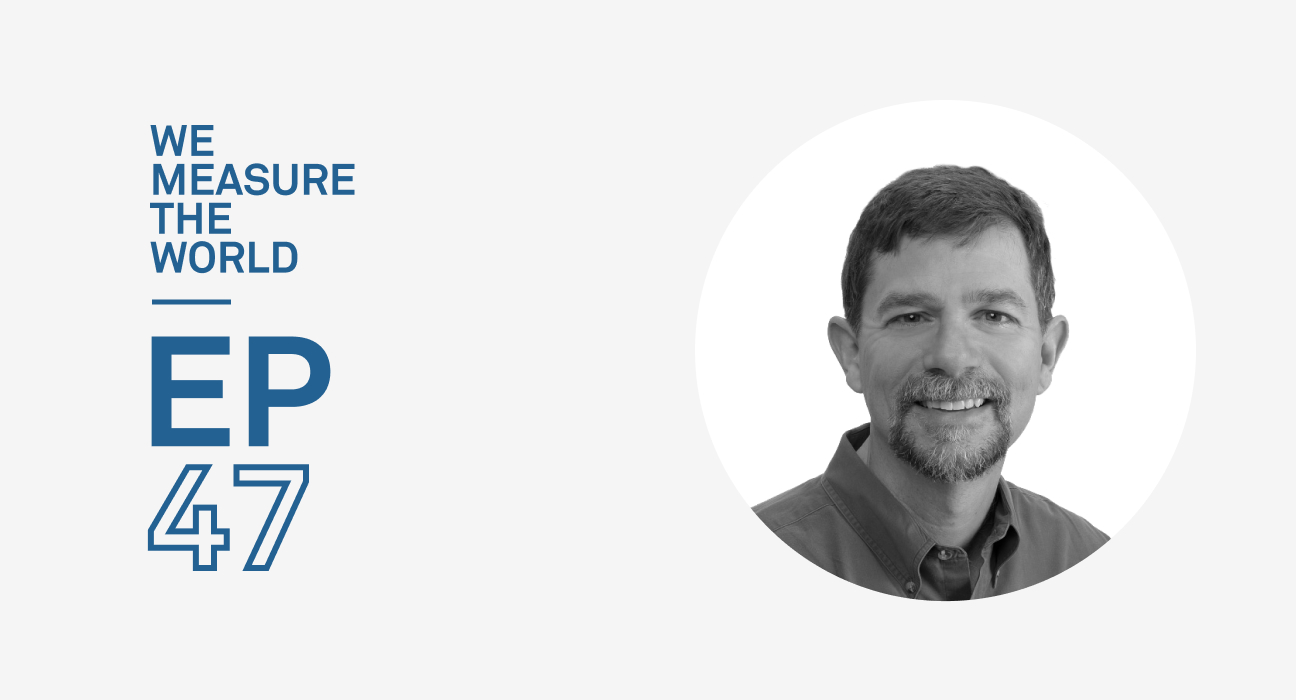
Understanding the full story requires researchers to harmonize data collected across political lines and scientific disciplines at different scales, on varying platforms, and by organizations with varying assumptions and methodologies. In this episode, Dr. Michael Young talks about his approach to bringing all these elements together into collaborative systems that serve all stakeholders.
Dr. Michael Young is the Associate Dean for Research at the Jackson School of Geosciences and a research professor at the Bureau of Economic Geology at the University of Texas at Austin. He holds a Master’s in geological sciences with a hydrogeology focus from Ohio University and earned his PhD in Soil and Water Science from the University of Arizona. He is a fellow of the Geological Society of America, the Soil Science Society of America and the agronomy Society of America and has served as editor of the vadose zone journal. With 40 years of expertise spanning academia, government and industry, his multidisciplinary work focuses on environmental geosciences, notably the water energy nexus and beta zone hydrology.
Our scientists have decades of experience helping researchers and growers measure the soil-plant-atmosphere continuum.
Disclaimer
The views and opinions expressed in the podcast and on this posting are those of the individual speakers or authors and do not necessarily reflect or represent the views and opinions held by METER.
Receive the newest content on a regular basis.
There is both an art and a science to understanding our changing planet, and mastering that intersection requires decades of curiosity, collaboration, and innovation—and experience.
In this episode, we talk to Arash Hosseini, Ph.D., P.E. and Matthew Ridgway, P.E. of Terracon about what it takes to make site-specific measurements consistent, accurate, and scalable.
Germany has committed to generating 80% of its electricity from renewable sources by 2030, as outlined in the Climate Action Act.
BRAD NEWBOLD 0:00
Hello everybody and welcome to We Measure The World, a podcast produced by scientists for scientists.
MICHAEL YOUNG 0:05
Somebody needs to say, okay, what thread rolls through everything you’re trying to do? And what I would say is I’m trying to shorten the distance between the data we collect, the information content that it has, and the decisions it can enhance. I totally respect people that are doing basic research. We need to have that. It took thirty or forty years for Brownian motion diffusion that Einstein developed in nineteen o six. Somebody’s gonna say it’s nineteen o four. Back then to really get into like the convective dispersion equation and to really begin building into the apps that we use every day. And I don’t feel I have fifty years.
BRAD NEWBOLD 0:40
That’s just a small taste of what we have in store for you today. We Measure the World explores interesting environmental research trends, how scientists are solving research issues, and what tools are helping them better understand measurements across the entire soil plant atmosphere continuum. Today’s guest is doctor Michael Young. Michael Young is the associate dean for research at the Jackson School of Geosciences and a research professor at the Bureau of Economic Geology at the University of Texas at Austin. He holds a master’s in geological sciences with a hydrogeology focus from Ohio University and earned his PhD in soil and water science from the University of Arizona. He is a fellow of the Geological Society of America, the Soil Science Society of America, and the Agronomy Society of America, and has served as editor of the Vadose Zone Journal. With forty years of expertise spanning academia, government, and industry, his multidisciplinary work focuses on environmental geosciences, notably the water energy nexus and Vadose Zone hydrology. And today, he’s gonna talk with us about his career and more specifically his recent research into understanding the full environmental costs of the energy transition. So, Michael, thanks for being here.
MICHAEL YOUNG 1:42
Thank you. Happy to be here.
BRAD NEWBOLD 1:43
It’s fun to have somebody in studio.
MICHAEL YOUNG 1:46
Yeah. It’s awesome to be here.
BRAD NEWBOLD 1:47
Alright. So as we do with all of our guests, we’d love to get a little bit into your background and how you got into the sciences in general and made your way into the geosciences and hydrogeology.
MICHAEL YOUNG 1:59
This is a really good question, and I think that I got into the sciences when I was eight years old and I was digging holes in the backyard looking for fossils. And so my dad told me that the dinosaurs were in the woods. And so I went out there and I eventually got my undergrad in geoscience from Hartwick. And I had to choose at that point because this is back in the early eighties and the late seventies, do you want to go into oil or water? And so there are actually companies recruiting, you know, the recent grads to go into oil. And I said, well, you know, everybody’s doing oil work. I’ll do the water side. So I got into more on the hydrology side and then I got my master’s in hydro from OU, Ohio University. You graduate, you know, with your master’s and you’re like, well, okay, now what do I do? I had to choose between permitting water wells in Florida or licensing radioactive waste disposal sites as a part of the federal government. And so I just decide I just thought that that would be a little bit broader perspective of the work that I wanted to do right out of my school. So I I went to NRC for a couple years. I was there for there for a couple years and then I worked as a hazardous waste geologist in South Southern New Jersey and in Delaware and in New York, you know, with the full dress out and the tie back and the masks and the whole thing. But even after that, after a couple years, one of the things that I really wanted to do was to understand what happens to water when it hits the ground. It’s a very, very simple question. Like, where does it go? And this became a big topic at the Nuclear Regulatory Commission. Right. Because at the time, there was no infiltration and percolation of water into disposal sites was not part of the license application. Right. It’s something that I identified when I was a staffer there. We brought in folks from the National Lab, from Pacific Northwest National Lab, and academics. And we had this like special task force that was studying this topic. And I was the representative for NRC, which was crazy because I had just turned twenty five. And I’m like, okay. And so then I traveled around the country these really luminaries studying this one topic that we really did not understand and it was not part of the license application. And so I was working with them and then I eventually left federal service, went to the consulting. But I always wanted to get my PhD right from the very, very first geology class I ever took, first course in the first class. I was like, I’m sold. Which is really unusual and I’m super lucky. I maintained the contact with the people that I was working with from NRC, which I think is really, really important for young people to continue to build that web of collaborators that you could have for your whole life. And Glendon Gee, who was at PNL, contacted my advisor at Arizona and recommended that I call him. And so I eventually went out to Arizona and started working for the department head, Peter Waranga, at U of A in nineteen ninety, and worked as his full time tech, and I was taking classes on the side to kind of grind out a PhD. So that’s kind of how I got into it. So I started off with general geology and then I focused on groundwater to all of the geologic material above the water table.
BRAD NEWBOLD 5:13
Got it.
MICHAEL YOUNG 5:14
And that was kind of where that that went.
BRAD NEWBOLD 5:16
Can you give us a little bit of insight into, from that point on, how has your career changed from doing, you know, early fieldwork into now leading research programs?
MICHAEL YOUNG 5:26
Yeah. I mean, I I learned a lot when I was doing the fieldwork. Like, how do you solve problems very, very quickly when you have multiple drilling rigs going on at the same time and they’re pulling samples out? I mean, it’s it’s pretty crazy with in full dress out exclusion zones and all the rest. And when I got to U of A, I already knew how to do a bunch of stuff. And so I had to learn sensor development, sensor testing, calibration, all of those things that in soil physics are required to actually make things work. And so I thought originally that I would study essentially hydrocarbons and how hydrocarbons mix in soil and in water. But we sort of understood at that time that we didn’t really understand how water was moving in there and how to even measure where the water went. So Peter said, you should take a look at this one technique called time domain reflectometry, which is TDR. So I said, okay, you know, and I was like, okay, doc, you know, whatever you want, I’ll work on. And so I started working on this particular type of electromagnetic sensor, basically measures the dielectric constant of a soil water and air mixes. It uses a particular type of a cable tester. This is really old timey. Everybody’s using frequency domain probes. Meter group now has frequency domain probes. But we were starting off with the with the really original TDR stuff and I had the cable testers and the coax cables and I was soldering the cables to the wires. I mean, you know, I got really, really good at soldering. I started working on calibrating these sensors, calibrating pressure transducers, building tensiometers, building thermocouple psychrometers and thermocouples themselves. When I started at Arizona, Peter said, I want you to build me a lysimeter, design a lysimeter, which is a basically means to measure water use. So we started off, we had a three meter high cylinder, two and a half meters diameter that would sit on a truck balance. And I learned how to use AutoCAD as a master’s student. And so I CAD ed up this drawing and gave it to Peter. He went to a conference in Hawaii and he came back and said, the Chinese are building three and a half meter tanks. We have to go bigger. He said, make it four meters. So I went downstairs and CADed up a four meter tall cylinder, which is nineteen cubic meters of soil. And so I basically led the construction of this entire facility with three of these lysimeters. I had to find all the soil. And so I learned how to use a front end loader. And I went out to one of the ag fields at UA and basically, like, you know, I had steel toed boots and a hard hat and I’m out there running, you know, the loader. And then I’m like, oh my God, I got class. And I run down onto campus and go to advanced engineering math classes, you know, in my steel toed boots and my hard hat. The kids there were like, remedial math is down the hall, right? It was totally crazy. I run back out there and drive this thing. And I had loaders and Bobcats and, you know, and so I built this whole thing with, you know, with other students and we installed all of those sensors in the lysimeters as we were filling it up. But I had to build all the interfaces. So I programmed in an interface that would run the TDR cable tester, would download all the data and it would monitor at multiple depths in multiple locations where all these sensors were. So I just learned, you know, I was out there, I’m like, man, I sure hope I’m doing this right because this is really expensive, you know. So I called Peter’s secretary and said, doc has not come by in weeks, you know. So Peter comes out and says, hear you’re nervous about the lysimeters. And so we joked around about it. But this facility ran for years. I got my dissertation out of it. And it was this combination of how do you measure what’s going on in the subsurface? How do you take the measurements, harmonize them in some way, contextualize them with atmospheric changes, and build a story of understanding what’s happening in the subsurface. That to me was really impactful. And of course, this is in a turf grass environment, so it’s a completely artificial, highly managed ecosystem. Eventually I moved into natural ecosystems, mostly in the Sonora Desert, and really focused on understanding how soil development, pedologic soil development, over thousands of years would change the water dynamics and how the water dynamics would alter ecosystem function, particularly with creosote and creosote bush. Larrea tridentata is the Greek name or Latin. So anyway, we studied that. I had a lot of students, mostly UNLV and University of Matarino. We did great work and it was super fun. And we did lots of measurements and sensor design and it was awesome.
BRAD NEWBOLD 9:54
With that background, you’ve been moving into, I guess, over the past, what is it, about five years or so, you’ve been moving into studying the environmental impacts of energy transition. Yeah. I’d love to dig into that and have that kind of be the core of our our discussion and conversation today. Can you give us just a little a a high level overview of that research program? Yeah. And and then basically what questions you’re asking. What are you looking at?
MICHAEL YOUNG 10:19
Most of the work that I did was at the meter scale and centimeter, almost sub centimeter scale. At the time, there was lots of remote sensing satellites that were going out there. To me, it was really quite interesting to try and take satellite measurements over regional areas and to scale that down so that, for example, if you had a large satellite overflight of a desert system, and you could basically, identify plants and the positioning of plants and the sizing of the plants. Now, when I moved to Texas and went to UT, one of the things that was going on in the deserts, the Chihuahuan Desert, was huge oil and gas development. Everyone, every well that was being drilled out there takes five acres to build a drill pad around that plus all the roads that have to connect all these drill pads. Now, this is very, very early on in the gas production and hydraulic fracturing sort of back in twenty ten. And I started asking the question, what does this mean to large intact ecosystems that are now being fragmented by these drill pads, these roadways, these pipeline pathways and things like that? And how could they be restored in a way that would essentially maintain or at least mitigate the impact ecosystem services and try to maintain intact ecosystems, which is very important for, you know, really regional scale. I’m thinking, you know, a hundred thousand hectares of those sizes, right? I had some students, we looked at the Eagle Ford play, which is south of San Antonio all the way to the Mexican border. We started working in the Permian Basin, which is the central focus area of US oil and gas production. We did a lot of work in Eagle Ford to understand how to how to do this with remote sensing, how to study change over time, how to look at clustering. We did a lot of work on clustering of wells and how that affected different types of ecosystems. And then all the restoration over time. So we we would do this over time. And then we did the same thing in the Permian and right about, probably about five years ago, just before the pandemic, maybe twenty eighteen, solar and wind was really picking up its steam and being deployed in large numbers. The wind corridor in Texas really starts in the Panhandle and goes south. Right? It goes and it goes all the way essentially down into Val Verde County, which is on the Mexican border. It doesn’t go super far into the Permian itself, but solar does. And so I got a couple of grants to study this of what does this mean in terms of ecosystems and large scale energy development writ large, not just oil and gas, but all of it together. And so we started looking at this as a systems approach, much more so than just focusing on one type. It was all types. And so we started to tie into ERCOT to understand where the power lines were. You know, ERCOT’s our grid operator. Or the power lines, where is the sun intensity higher? Where’s the wind intensity higher? Where are the solar panels likely to go? Where are areas that could be avoided? Because the land has much higher value. I’m thinking of riparian areas, river corridor things like that. And we started building applications, online apps to identify places where wind and solar could be more easily placed with the least damage to ecosystems. That really is kind of what began this question because now we’re putting in all of these solar panels, but they have to be eventually connected up to a power line. And then they have to be operated. Well, how do you do that? And this whole thing just kind of tumbled upward. Now, my God, now we’re looking at life cycle assessment and we’re looking at eighteen different environmental impacts, not just land quality, but it’s CO2 emission and eutrophication, which is nitrogen outfall and acidification, SOx and NOx, you know, things like that. I just don’t have any boundaries and it just kept growing. We got a generous donation from a company called Tellurian and that really got us started. And then Scott Tanker, is the director of the bureau, we worked together to identify additional sponsors who would sponsor our research. I brought in engineers. I’m the only geoscience person in this whole project, with the exception of a couple of students. We’ve had chemi, mechanical engineering, systems engineering, grid modelers, economists. So we work with a couple of economists to study this. I think that the key was for me is just not limiting the people who I would bring in to solve the problem. And to figure out a way to communicate. I mean, the really the hardest part in communicating with people outside your own discipline is vocabulary. Yeah. Your background’s in anthropology. Know, I’ve been on projects where we would spend months just lining up vocabulary. So when you talk about sustainability, well, sustainability means different things to different people. To a person who’s in energy production, sustainability is sustaining their production. Ecosystem people are looking at sustainability of the ecosystem. Everybody is looking at this differently. So you have to somehow frame and contextualize the discussion so that everybody is on the same page. And then realize that we’re all here as professionals. We’re not going to agree on everything, but we’re going to build a more comprehensive understanding of the problem and the choices of solutions. I’ve done a lot of reading and talked with a lot of people about choice architecture and optimization of multi optimization schemes. It’s been crazy, but it’s been really fun.
BRAD NEWBOLD 15:19
Good. Good. I was gonna say it’s you’re not that far afield, but but definitely when you’re dealing with these interdisciplinary programs and research groups, you do have to become, you know, multilingual and be able to to translate from from one to the other. Yeah. And being able to incorporate all those different perspectives into that final research that you’re doing. That’s right. And your final outcomes.
MICHAEL YOUNG 15:40
That’s right. And you have to go in with an understanding that nobody is judging the value of somebody else’s research. That we look at all of these things as vital to telling the story, to coming up with a comprehensive solution that everybody can more or less buy into. It requires everybody to give in a little bit. It would be great if we somehow could just magically turn on the lights and the power would come in and there would be no impact whatsoever. That’s not what happens. Right? How do we make sure that we have the highest reliability of electricity with the lowest environmental impact? Not only locally here, but globally. And that was really the topic that we were starting to work on and we’re continuing to work on. Because if we generate electricity here and depending on how we do that, there’s local impacts and there’s global impacts. Global, of course, is the CO2 emission. The local impact are land occupation, water use, and SOx and NOx, the other things that are affecting local communities. In other words, who’s going to be downwind at the power plant? How do we locate the power plant so that it has the least impact to communities, particularly at risk communities, under resourced communities? So I have a master’s student that just finished work on onshore all battery refining and operation. Like in other words, lithium, cobalt, nickel, all manufacturing of the batteries. Okay, well, where are they going to be located? And where are they going be located relative to where people live? Because the impacts are going to be locally felt. And we’re trying to balance that as well. Local, you know, we have local impact, global impact. We have immediate impact. Have long term impact. Because the long term impact is the CO2. The immediate impact is the outfall from the power plant. We need to balance all of that. And of course, we need to balance it with data. We need to be able to measure this. And this is really where we’ve struggled and we’ve worked a lot is everybody collects the data in a different way. They harmonize it differently. They report some of it and not other things. They report the data without the method. So we have no idea really how do they do this. This has been a problem. There’s because there’s harmonizing data from satellites, from individual studies, from models. What are the assumptions that underlie the models? What are the assumptions that underlie the sensors? These are not reported. And so intercomparison is virtually impossible. So we start putting ranges on our outputs. Okay. We think it’s going to be between a and b. What’s the distribution? Is it a uniform distribution? Is it Gaussian distribution? Is it log normal? I mean, you into the weeds very quickly. And then we run hundreds or thousands of models. I had a master’s student that did this for nickel. She ran seven hundred different simulations just for nickel production. And then we were able to come up with this was the optimal pathway of nickel from the mine site all the way to incorporation of the batteries and deployment of the batteries. The mining in Indonesia, the refining in China, the deployment in Texas, how can you optimize that? So we ran hundreds of those simulations and she had to learn Python. And she coded it all in Python and we ran this standardized modeling platform and we figured out how to do all that and we ran hundreds and hundreds of samples. So all my students that are doing this are all learning Python Good. And running models.
BRAD NEWBOLD 18:51
Good. It’s a good skill to learn. Yeah.
MICHAEL YOUNG 18:54
It’s a great skill to learn.
BRAD NEWBOLD 18:55
Especially, yeah, at the at the grad or undergrad level.
MICHAEL YOUNG 18:58
Oh, Very much.
BRAD NEWBOLD 18:59
Yeah. Super useful beyond that.
MICHAEL YOUNG 19:01
Yeah. You don’t have to be dependent on other people.
BRAD NEWBOLD 19:04
Yeah.
MICHAEL YOUNG 19:04
You can actually develop it on your own. It’s great.
BRAD NEWBOLD 19:07
So I would be remiss as an instrumentation company Yeah. If I didn’t ask about about how you’re going about measuring all these various environmental factors variables.
MICHAEL YOUNG 19:16
What we’re doing is sort of pretty far afield from what METER does, but I’ll I’ll give you one example where it’d be very important. When you put a solar panel out and a solar field out into into production, generally speaking, it takes about five acres per megawatt of land in order to generate electricity. A utility scale solar facility is usually a hundred megawatts or larger. So you’re looking at five hundred acres, you know, usually it’s five hundred, a thousand. Now you’re looking at square miles. And you’re taking the land out of production, you’re sort of influencing local ecosystems. Where the meter group comes in that would be very, very helpful is to understand the environment underneath the panels. Right? What is the microenvironment? Is it hotter? Is it cooler? Is it wetter? Is it drier? And how do you position the panels so that you can continue to build and continue agricultural production underneath the panels in a way that would have multi use of the land at the same time? Part of Energy has has a program that’s called PV Smart, where they’ve started this process. It’s very localized, mostly in the upper Midwest, of really trying to build a much more, I would say, holistic monitoring program to understand the environments underneath panels so that we can maximize agricultural production, or I would at least say vegetative growth, to rather than just blade and grade and covering the land with gravel, which is common, right? You know, we did a lot of literature review and I had a postdoc that helped with this, was that land that is taking out of ag production into solar panels tends to have lower air and water erosion after the panels are in place. Because there’s all sorts of flood mitigation equipment that is put out into the field. They’re putting in barriers, they’re putting in topography to avoid suspended sediment from leaving the facility. So they have a permit, a federal permit, that they have to show that there’s not going to be any off-site impacts. So ag production, you put solar panels out there, tends to have lower impact. If you go from a grassland area and then you blade and grade and you put panels, now you have much higher erosion because the original ground cover was holding everything in place. Now you’ve removed that and so these are the areas where you could do all of the monitoring. To enhance ag production gives a whole bunch of advantages. Number one, there’s much less erosion, so this is good for soil quality. Two, you’re growing electrons the solar panels. You are improving ecosystem services or you’re mitigating the downside. The landowner gets value by leasing out the land for ag and for solar panels. There’s a way to optimize this. We are talking about large land areas that and solar panels are admittedly, you know, something that people are not used to seeing. In Texas, people are used to seeing pump jacks. They don’t have a problem with that. Solar panels and wind turbines is a different story. There’s a little bit of a cultural equilibrium to people to get on there. But the argument that this is going take away ag land can be more or less mitigated by doing ag production. And there’s a lot of ways to do that. The research community at multiple places, University of Arizona is doing some of this. I know University of Minnesota is doing some of this. This is really being done by the community. So there’s a lots of areas on how how can this be done, and this is where has this would be a really good niche for METER Group to think about.
BRAD NEWBOLD 22:30
Yeah. One of the fun things that I get to do in my real job, I’m not just a podcast host here. So in my work with customer research is we are seeing a lot of growth in the agrivoltaic sector Yeah. Which is really fun to see. And we see these people coming in with these different either research projects or in the private sector saying, hey, I’m I’m doing x y and z, and trying to figure out, yeah, what cover crops can what can I grow underneath it? We we had one individual who was trying to figure out what kind of livestock could I have around there, and they kinda were figuring, I think sheep would be the best. Yes. Best fit under that. Goats. Yeah. Exactly. Not cattle either.
MICHAEL YOUNG 23:12
Yeah. Well, the goats jump up on the pan. Right? Yeah. The sheep just kinda hang out.
BRAD NEWBOLD 23:17
They hang out. They graze. They’re good. But No. Definitely, there’s a there’s a lot of growing interest.
MICHAEL YOUNG 23:23
Yes. I think that’s The other the other area of research that I’m still working on is sort of groundwater recharge. In shallow and very thin soils, karstic soils in the hill country of Texas. I’ve been operating and being part of the Texas Soil Observation Network, which is what we call Texan, which is about forty stations, mostly focused in the Fredericksburg and Johnson City area of Texas. And these are traditional weather and soil monitoring stations. We’re monitoring soil moisture at multiple depths. Many of them have they all have rain gauges on it, we also do kind of Penman-Monteith, you know, PET type stations. And we were running a couple of EDI towers to get actual ET. And I bring that up because this is another area that the thing that I really harp on a lot is the importance and the value of ground based stations. It’s very tempting to rely one hundred percent on satellites. It’s easy. You know, it’s they’re there. They dish it out for you. And even like planet dot com and Maxar, I mean, these are getting down to thirty centimeter resolutions. This is incredible. Multi band thirty centimeters every day. This huge data sets that you could almost not even download. Just managing terabytes of data is difficult. You still need to have ground truth. These stations represent ground truth points that can be used for satellites, including new satellite platforms that are being launched pretty much regularly. So NASA and an Indian space agency, they’re launching NISAR. And so we’re we’re working to be one of the calibration sites for NISAR. So I think that there’s also that it’s very important to have those. We tend to have permanent stations, but I know that one of your product lines is basically a relatively fast, quick deployable MET station.
BRAD NEWBOLD 24:58
The ATMOS line.
MICHAEL YOUNG 24:59
Yeah. The ATMOS line. So that also would be very, very important to be able to, you know, the space agencies have put, you know, hundreds of millions of dollars into satellite. They put zero into calibration. I can tell you this. You can’t get, it’s really, really hard to get money from NASA to do calibration. Basically, they don’t put anything in the budget to do it. They rely on the scientific community to help. So they will often have these field campaigns where they’re going go to a different type of an ecosystem. Okay. We’re going go to grassland. We’re going to go to a semi arid. We’re going go to a desert. And then they will have an intensive monitoring period where they will go out and do calibration. But this would be an area where mobile and rapidly deployable sensors would be very, very useful to calibrate sensors in these really intensive monitoring periods. If somebody is to say, okay, what thread rolls through everything you’re trying to do? And what I would say is, I’m trying to shorten the distance between the data we collect, the information content that it has, and the decisions it can enhance. I totally respect people that are doing basic research. We need to have that. It took thirty or forty years for Brownian motion diffusion that Einstein developed in nineteen o six. Somebody’s going say it’s nineteen o four. Back then to really get into like the convective dispersion equation and to really begin building into the apps that we use every day. And I don’t feel I have fifty years. So I really try to focus on a three to five year timeline. The research today can help inform decisions in a couple of years. And that changes the trajectory of the discussions. We’re taking data from Texan, our soil monitoring network. We’re then using machine learning to now cast that data directly into an immediate soil moisture profile, or I would say a map of soil moisture. We’re trying to do this for the whole state of Texas by using the Water Development Board’s network and our network. So we’re trying to shorten that distance. Right? And that requires us to kind of getting back to your question. That requires us to harmonize the data that’s coming in in different formats at different spatial scales at different time scales and harmonizing that into a story, a data story, that can then be used to make decisions. And that is really, really challenging to do. And because the satellites are coming in at one resolution every fourteen days, we then have to wait a period of time for them to give us hourly or three hourly data. That’s what NASA provides. We’re measuring half hour averages with our eddy. We’re measuring fifteen minutes with our other stations. How do you combine those in a way? It sounds like it’d be all, yeah, we’re just gonna use the a, b, and c methodology and that that doesn’t work. When you scale that up to supply chain and the data that’s being used for studying the movement of goods across a particular area, that’s really not that different than the movement of energy across a particular area. Right? So there’s uniformity in this and these are just systems. These are systems that are affected by gradients. We have a lot of cobalt over here. We got no cobalt over there. There’s a gradient, right? There’s a gradient in water and water energy and a potential. Okay. So water is going to go from high potential to low potential, from negative to more negative. These are universal laws. So I try to apply these universal laws that I kind of conjure up in my head probably into how can I take what I know now and maybe look at problems in a different way? And to me, that’s the value of collaborating with people that are super far outside of what you do. I’ve had a great time collaborating with anthropologists and communications, the comms people and behavioral economists. They think about things differently. To me, it’s fascinating to take what I do in, you know, in the sciences and probably systems engineering and to build that into a way that it can be used more, I would say, appropriately.
BRAD NEWBOLD 28:44
You just rift. That’s beautiful. No. Riffing is Sorry. Riffing is great. I would ask in in the work that you’ve been doing there in Texas, when you’re dealing with ERCOT and its independence, do you see that as a microcosm of larger scale factors and interplay? Yeah. Or is it just so unique that it might be its own animal?
MICHAEL YOUNG 29:03
It’s both. Right? And so when I was in Nevada at Desert Research Institute, we had started this project that was called coevolution. And it’s the coevolution of human systems and natural systems, like the built environment, the natural environment. And we were studying this from the Colorado River Basin. And that that includes the movement of water, of people, of commerce, of data, of traffic, of food. And it was impossible to do this because the Colorado River Basin, there’s water that and there’s commerce and there’s mass that jumps the boundaries of the Colorado River Basin. Understanding how much is moving through these porous borders became impossible. And it was difficult times in Nevada, long story. Suddenly UT calls, I’m like, oh, let’s go to Texas. So my wife and I, we pack up the dogs, you know, and off we go to Texas, to Austin. And I realized, and I kind of knew this somewhat, but ERCOT is its own grid. The groundwater is recharged within Texas for the most part. Right? Carissa Wilcox, Edwards, these are almost all recharged within Texas. The river system is almost all headwater in Texas. So we have this really interesting microcosm with impermeable boundaries that we could study the movement within because we don’t lose the electricity. We we don’t get electricity. We get very little electricity from outside of Texas. So we can measure the source, the supply and demand without having to worry about the errors that are occurring when things are jumping borders. If you were in Iowa, you wouldn’t be able to do that because there’s so much, you know, when you look at your box, your region of interest, things are entering the box and leaving the box at rates that are difficult to quantify. And electricity is particularly a problem. So the ERCOT grid represented to me like this perfect playground to study it. And it just took time to get our narrative together so that we could study the water side, the energies, the electricity side, all in one place. And we’re trying to match these up. So, okay, if we’re going to use combustion turbines to generate electricity, we need water, the water to cool the turbines down. We don’t have that problem with wind and solar, very, very little of it. So we’re trying to match up these critical pillars of what society needs and do that in a way that we can get a better sense of how should we position these things going forward. If the grid is going to evolve from combustion based to a broader mix of combustion based and non combustion based, let’s say wind, solar, batteries, geothermal has plays a very important role. That’s not really combustion based because that’s just you pulling energy out of the ground. How could we do that and still build in resilience on all those systems together given changes of like, our boundary conditions are changing. We had no climate change. We had no extreme events. No new people moving into Texas, no new increased sources of load, we could figure it out. But our boundary conditions are changing. We’re trying to do this in real time while the stress on the system is increasing. And that turns out to be really, really challenging. Because the Texas population right now is thirty four million or so give or take. It’s likely to hit close to fifty by mid century, maybe just under fifty, forty eight million. They’re going to be looking for one hundred gallons per day per person of water. Are we going to get that? You know, current projections are that data centers are going to come into Texas. We’re going to get an increase of ten gigawatts of demand per year for the next five years. I don’t know where we’re going get that. We need fifty gigawatts of power. That means we need more water to do the cooling. That means we need more material to build It becomes this really interesting interconnected system. And so this is really where the systems engineers come in. So I see Texas as being this microcosm, to kind of get back to your question, that could be scaled up to Hawaii, for example, that’s an independent system. I’ll ask a problem, most likely is independent. I’m not sure about their grid. How should, and forgetting about jurisdictional boundaries, you know, like states and countries, how should others begin to build their system so that it’s resilient and affordable? We talk endlessly in our group about resiliency versus fragility. If you have a system with one choice, you have an inherently fragile system. Right? You can’t have one choice and call it resilient because the boundaries are changing. So we have to build in some inefficient choices. Wind and solar may have, they have their own inefficiencies, oil and gas, they have their own inefficiencies. So we have to build in inefficiencies into the system in order to make it resilient. How much insurance are you willing to pay in order to create this resilient system? I mean, is really the question when we’re hitting extreme events that we can’t predict. So I’m working with climate scientists right now to essentially begin predicting the likelihood of, for the next thirty years, for example, of a hailstorm that could occur in any county in Texas in any given year for the next thirty years with a hailstorm that has at least four centimeter diameter. Because that’s what’s going to damage the panels. We do the same thing for wildfires, do the same thing for tornadoes, same thing for landfall of hurricanes. So we can build that in and account for these extreme events that we didn’t really think about, you know, these black swans that could have these effects on the system that we didn’t anticipate. To me, that’s really the hard part is building in stochastic events with a distribution that’s going to have long tails, which we don’t understand because we have very little n. You know, we have an n of one, n of two. Like, oh God, how do you predict this when we have no n? And n for the audience is the number of events. Right? In statistics, you want to have something greater than an n of one. You want to have an n of forty for Gaussian. So we try to study these things and then build those into the broader life cycle assessment of these other systems that we’re building and these other models. And then ultimately gets into the grid. One of my colleagues, Johnny Das, she’s our grid modeler, and she’s basically, we’re building in into a grid model that takes every power plant in Texas, all the big power lines, all the transmission lines, all the substations. I think we have three thousand two hundred nodes. And we run that every hour of a year. And we look to see how do the systems work. Okay, now let’s throw in an extreme event. And power systems are very heavily dependent on me. If you really want to know what the load’s going to be, just look at the weather patterns. Because if it’s really hot, people turn on their air conditioners. If it’s really cold, people turn on their furnaces. In early May, it’s very temperate. You could really see how the grid would operate under temperate conditions. How do you build resiliency with these events that are unpredicted or poorly predicted? And certainly they’re projected but not predictable. That to me is a really interesting problem. But I still think it scales down to people. People are unpredictable. So I mean, I always just look at these things as like, you know, microcosms of the decisions that people make at their home. Right? We are trying to build resiliency in our families. So if your whole family is a hundred percent dependent on one source of income, that’s not resilient. We do this subconsciously. We build multiple systems to build resiliency without knowing we’re doing it. Knowing, oh, I got to go to the second job. It doesn’t really pay that much, but we need that, the second source, right? It’s a totally scalable thing.
BRAD NEWBOLD 36:11
Anything that has been surprising in your recent research?
MICHAEL YOUNG 36:14
Again, my life bifurcated. It was sort of ecosystems and soil physical on the one hand and then supply chain and grid modeling and energy transition on the other. Apparently, I really need to focus more. So long as I get the pubs, you know, it’s a pleasure. Okay. It’s pretty fun. On the grid modeling side, what really took effort was parking my biases at the door and just going in there and saying, okay, what is the best we can do right now? I was, I wouldn’t say disappointed, but we were really looking to see, could we push the ERCOT grid into a hundred percent renewable? Right? A hundred percent carbon free energy. We couldn’t do it. The best we could get was about two thirds. And that was two thirds with some level of technology development that would be required. So that was a little bit surprising. The other thing that really I didn’t really account for and I didn’t really think about until we really got into it was the fact that, you know, CO2 emission is of the environmental impacts that are studied in life cycle assessment, and there’s lots and lots of people who study atmosphere chemistry, but all of the others are very local. Water use is local. Water is very heavy, you’re not moving that around very much, right? Particulate matter, that’s usually a local impact. We didn’t really think that much about this dynamic of local versus global impact. And it really forced us to think about, again, the community scale of what it was that we were trying to do. That was something that I really appreciate. Then, of course, working with these other organizations, the comms people, the people that do essentially community surveys, that really gave me, I would say, little bit of a leg up by saying we can’t forget about these communities because if the communities are impacted, well, they’re just going to vote against it. And if they vote against it, because we do still live in a representative democracy, that they can essentially delay or stop progress. And if we need more power lines, mean, just give me an example, it typically takes fifteen years to permit and build a new power line system because communities don’t want to have the power line. Same thing with wind and solar facilities. And so the decisions of where we are today are largely our own. Our own making. If people want to have more electric vehicles, but they’re too expensive. The reason too expensive is because we don’t buy enough of them. So if you want them to be less expensive, more people need to buy them. And so again, it comes down to the household scale of the decisions that we make as people that are affecting the broader impacts and the broader technology development. I’m sure that the fact that we can only get to really two thirds wind and solar in Texas, and that paper is now going through review, other people will criticize that and say, can get to a hundred percent if you were to do these things. Well, those things are not scalable yet. Like, we had to use eight hour batteries that are not actually deployed. So we had to do things that are, we anticipate innovation, we can plan for innovation, but it’s hard to quantify it. And that’s something that I think is something we need to try to do. And that also involves the technology. I mean, it gets into sensors for sure, what METER is doing. It gets into all of these things, right? It’s all of us pulling in the same direction. And I mean every one of the stakeholder groups, Sensor developers, I would say data managers, this includes data centers. We’re in the middle of just taking thin sections. This is a project that I’m helping on at UT. And thin sections alone, we have about two hundred thousand thin sections. To scan the thin sections and to digitize them is going to take twenty two petabytes of storage. Just the thin sections. How do you even, how do you store and recover data from twenty two petabytes? Crazy amounts of data. So we don’t have a way. We in the community, the scientific community, I’m sure the computer science people are figuring it out. Amazon’s kind of figured it out. You can buy anything. Petabytes of data sitting in their database somewhere. We in the scientific community have to figure out how to take the data from these different sensor platforms and harmonize them in a way that the data is retrievable so that we can gain insight from them and so that we can make data from the insight. I think that is one of the greatest challenges we have right now. Individual sensors, we need disruption in that area, But somehow we have to figure out, either we go back to the basics and we don’t worry about storing data on the cloud, we just take the sensor and this is it, or we have to figure out a way to harmonize the data in a way that we can gain, we can tell data stories that communities can understand because they will not listen to me. They will listen to a story. People don’t care about data. They care about the story that the data tells. So we have to get better at storytelling. And we have to get better at storytelling not in a way that’s condescending, that resonates with people. If we can do that, that would influence the way people think.
BRAD NEWBOLD 41:06
Yeah. Yeah. I hope. I hope so too. I I think that’s a key, and we’ve asked that question of many of our guests as well is how do you bridge that communication gap between the researcher and the science, academia, and the general public? And quite often, it’s very difficult. Yes. And a lot gets lost in translation. Yes. Yeah.
MICHAEL YOUNG 41:25
I I think that part of it is, because we don’t understand what they need, so we’re working on a project now where we’re really focusing on how do we communicate the decision makers. It’s very, very, and the thing is, it’s very simple. So let’s take the sheriff or the flood control district manager. They need to know one thing. Do they respond to this flood event or not? They don’t want to know it’s going to be x, here’s the distribution of the It’s very simple. Do I go or do I not go? One of my previous jobs I was helping to sort of build a seismology program in Texas. And so we would go to the emergency management, you know, the Texas Division of Emergency Management, TDEM. And we sat down, we talked and we got everything in what they call the Red Book, which is the book of hazards. Floods, tornadoes, wildfires, demonstrations, like how should the state respond to an emergency? We were pretty much told, you guys do not worry about is it a magnitude three, is it a magnitude four? Is it a this flood risk, that flood risk. They just need to know simple answers. Do I respond or do I not respond? I was like, bonk on the head, you know, and I really like internalize that. So, okay, okay, I can get that. And that’s the same that everybody just wants to know. They do not need all the details. They, I hope, they are relying on the scientific community to work through the details to get data that they can trust in the same way that we rely on elected officials to represent our views and our values. We rely on the teachers to teach our children. This is how it works. Right? This is how society works. We rely on the person who’s driving ahead of us not to do something crazy and crash. It’s an inherent partnership. We have not figured out yet how to communicate what it is we’re doing to our partners who make decisions. Part of it is that the static of life is just so intense now with social media. I go on about this at home a lot. Social media, blah blah blah. You know, there’s just so much static and misinformation. People don’t really know what to trust. We have to break through that somehow again and build the trust in science. And I would say that when you do community surveys, I think the trust in scientists has taken a hit over the last probably ten or fifteen years. It’s still way above elected officials. And really the number one trusted, generally speaking, the number one trusted voices are evening weather person. They’re trained at communicating. So I listened very carefully. I was listening once and the guy got up there and he started talking about the difference between meteorological drought and hydrological drought. I nearly fell out of my chair. Because we had gone through a drought in Texas. We had normal precip, but we’re still in the middle of a hydrological drought. And that’s why we’re in like a stage two or stage three conditions when we are getting rainfall. Because people want to know why we can water, you know, we do these things now because we’re getting rainfall. Nope. And here’s why. So they explained it. I was like, my god, that was a huge victory. I to go backwards and took pictures of the Yeah. On the green screen. Was it was awesome.
BRAD NEWBOLD 44:30
Beautiful. In thinking forward, I mean, you’ve had forty years of experience in the discipline. If there’s somebody that comes to you, a new young researcher looking to get into the natural sciences or even geosciences or other things like that, What are some of the learnings or pieces of wisdom you might share to them as they’re coming into the field?
MICHAEL YOUNG 44:49
Yeah. No. It’s a really good question. I think about that a lot because I still have some students and I get these questions from them. There’s a really interesting book called Range. I’m not plugging the book. I’m not an author. I get nothing payback. Range is about single sector thinking versus broader thinking and broader experience. So it’s really, really interesting. What I would say is to always remember to use the words, yes, I can. I can try that. I can do that. And to try to build experiences that start to build the wall of knowledge in particular areas. If you get too narrowly focused, it will be difficult to contextualize the way that the work can be used. Research, this is a business. We need money to do research. Companies basically understand that. It takes money to do research. It takes money to run a company like METER. And, you know, there’s an ecosystem. You have clients come in, they buy stuff, you build new things. You know, I mean, is the way it works, right? This research and on university campuses work exactly the same way. So being able to think about how the research kind of applies and being able to excite the person on the other side of the table is a real skill. So I would say really focus on that. Realize that back days ago, can look at this. I think it’s Hillel nineteen ninety two in Journal of Hydrology. No, Soil Science. It’s called the circuitous path of research. And he uses this metaphor where there’s this boat, and the boat is sailing and it goes off to the left and it hangs out in this culdesac for a while, then it goes off to the right and hangs out over there and it goes off to the left. It’s a circuitous path. He was one of my colleagues when Hillel was still alive sadly he passed away, but he gave me a preprint to this. He said, Tell me what you think of this paper. And it was back a while ago. And so what I would say is for people to accept that it’s okay to be in the culdesac And to go in there and to learn what you can and to build that into the aspect of science that gives you passion. And then go into another culde sac. But there has to be a way to get out of that. And if you stay too long in the culde sac, I mean, as an advisor to students, I want the students to go into the culde sac, stay in there for a while, fail, and then figure out a way to get back. And if they get caught in this endless loop, infinite loop, I try to help them to come back so that they can see and continue to make progress. So there’s a reality that we learn more about ourselves when we fail than we do when we succeed. You have to give yourself permission to fail. And then to learn from it and to pick yourself up and keep going. Because that sort of dogged resiliency to me is really, really important. And not be disappointed. You can be disappointed, but if you’re crippled from the disappointment, you know, then you’re missing what you need. It’s sort of like, I will learn Python, you know, or, you know, mean, you really learn the convective dispersion equation, everything you can about thermal conductivity. I would say those are great because those are universal rules that follow everything. I’ve seen articles on how the convective dispersion equation was used for studying traffic patterns. There’s a universality to this. And so bringing those experiences in together to paint this more holistic story of a career, I think to me has been really fun. We are in a chaotic time in terms of funding, in terms of the relationship between government and academia. Keep an open mind of where you can take what you like and what you love and your passion and apply it into something else. You know, it’s a forty year marathon. It’s not a five year sprint. Right. Keep writing papers if you want to be in academia. Do things that are important to you. I think that’s the main thing, right, in life.
BRAD NEWBOLD 48:37
With that being said, we’re close to the end of our time. Any other final thoughts that you’d like to share, anything that we didn’t cover that you’d like to make sure that we touch on?
MICHAEL YOUNG 48:48
There’s a huge, huge need for science and tech development and engineering. We are nowhere near where we need to be. I hope that really the next forty years, really mid century, now is the time to build disruption into what it is we’re doing. Think of things that are way outside of the box.
BRAD NEWBOLD 49:05
Maybe we’ll have to have you back another time. We can dig more into the weeds about energy supply chain or infrastructure Yeah.
MICHAEL YOUNG 49:12
Yeah.
BRAD NEWBOLD 49:13
There’s Or your side hustle in ceramics and all that fun stuff.
MICHAEL YOUNG 49:16
That’s really fun. No. No. That actually The side hustle in ceramics is really great because it it takes soil science, it’s math, it’s material science, it’s high temperature geochemistry All in one thing. So I would really recommend everybody to do that. Beautiful. Beautiful.
BRAD NEWBOLD 49:30
Great. Well, Michael Young, thank you very much for stopping by spending this time with us. It’s been a great discussion.
MICHAEL YOUNG 49:37
It’s been really fun.
BRAD NEWBOLD 49:38
Thank you. Good. Alright. And, if you in the audience have any questions about this topic or want to hear more, feel free to contact us at METER Group dot com. Or reach out to us on X at meter_env. And you can also view the full transcript from today in the podcast description. That’s all for now. Stay safe and we’ll catch you next time on We Measure the World.